
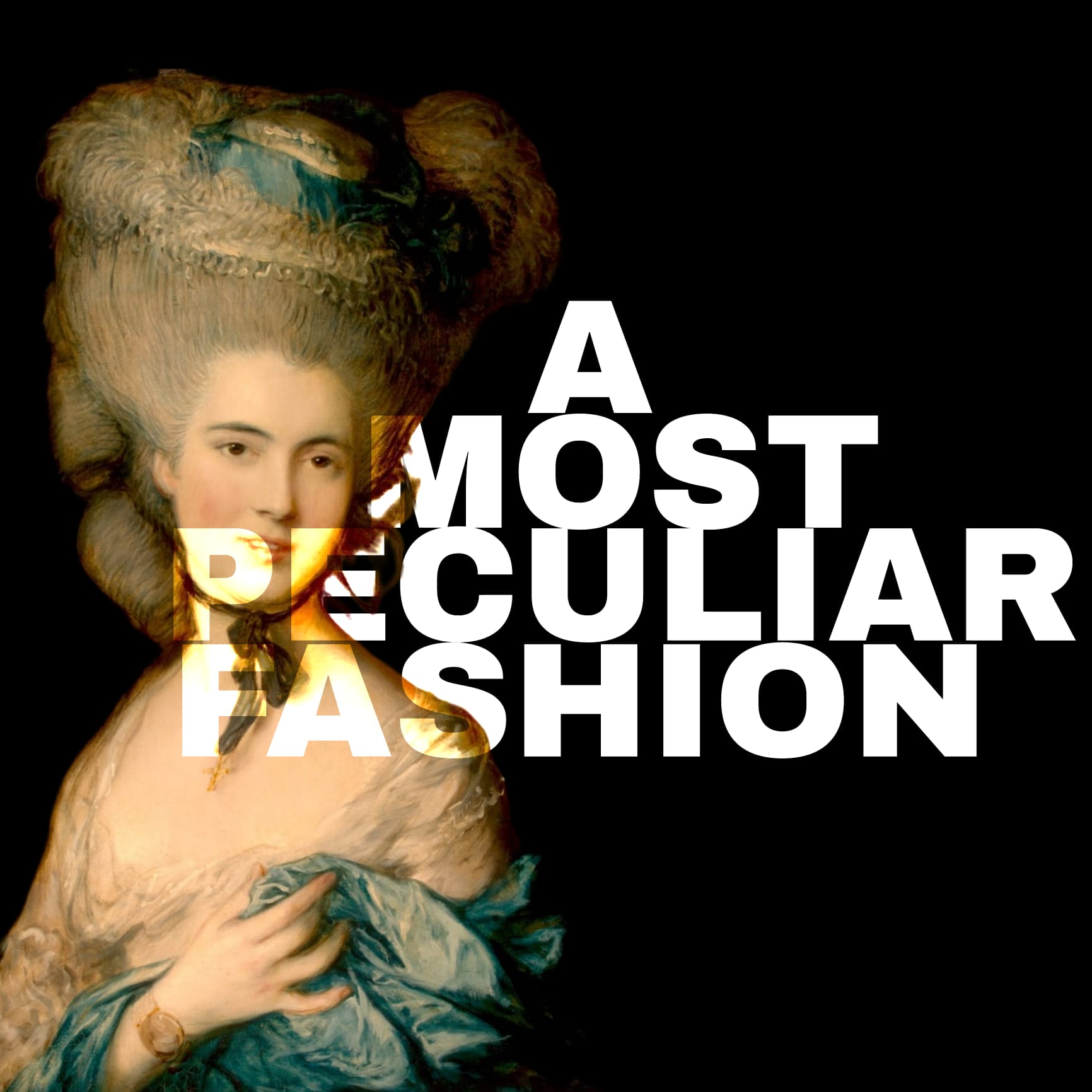
Introduction: Visual History and the Assumption of Whiteness


Medieval and early modern European history is preserved largely through images. Noble portraiture, royal family paintings, court scenes, devotional panels, engravings, and illuminated manuscripts are treated as authoritative records of identity, hierarchy, and lineage. These images are routinely accepted as transparent reflections of the people they depict. Racial identity, in particular, is almost never questioned. European elites are assumed to be white, and every physical feature represented in their portraits is interpreted through that assumption rather than tested against material reality.
Yet bodies are biological, not symbolic abstractions. Hair, in particular, is governed by physical laws that cannot be suspended by artistic convention. When hair is gathered, elevated, and arranged into an updo, its behaviour under gravity is constrained by fibre geometry, elasticity, and mass distribution. These constraints operate regardless of cultural context. For this reason, hairstyle orientation becomes a powerful diagnostic tool. It allows portraits to be evaluated not as stylistic fantasies but as representations of physically possible bodies.


A recurring problem emerges when this lens is applied to European noble portraiture. Many figures later classified as white appear repeatedly wearing updo hairstyles that display vertical projection, volumetric self-support, and resistance to gravity. These are not rare curiosities or isolated experiments. They are formal, court-sanctioned styles presented as stable markers of identity and rank. Their structural behaviour corresponds precisely to hair textures associated with Africans, particularly kinky to tightly curled hair, and stands in clear contradiction to the natural behaviour of straight or loosely wavy European hair.
Orientation as the Primary Diagnostic Feature


Historical discussions of hair are often distracted by terminology. Styles are catalogued under names such as baroque and rococo, as though classification alone resolves the question. This approach obscures the most important variable: the direction in which the mass of the hair resolves once gathered.
An updo may resolve downward, folding or collapsing back towards the scalp, neck, or shoulders, or it may resolve upward, projecting vertically or diagonally against gravity. This distinction is not subjective. It is governed by how hair fibres behave when compressed, tensioned, and lifted. Two hairstyles that appear superficially similar respond differently on different hair types. Orientation therefore provides a more reliable analytical framework than stylistic naming.
When orientation is examined across populations, a consistent pattern appears. Straight or loosely wavy hair produces downward-resolving updos when styled in natural agreement with its structure. Kinky or tightly curled hair produces upward-resolving updos under the same conditions. These outcomes are not matters of preference or fashion but of physics. These natural upwards or downwards orientation provides the foundation for invention of styles or cultural variations of hair grooming.
Hair Fibre Geometry and Gravity


Straight and loosely wavy hair, typical of most European populations, has a predominantly cylindrical or slightly oval fibre cross-section. It grows in patterns that favour lay and flow along the scalp and possesses relatively low torsional resistance. When such hair is gathered into an updo, the combined mass yields readily to gravity. Volume collapses inwards, tension resolves downward, and the hair folds, loops, or drapes. Sustained vertical projection is unstable without external support.
Updos formed in natural agreement with straight hair therefore emphasise smoothness, continuity, and length. Even when positioned high on the head, these styles tend to curve downward and rest against the head or neck. Their elegance derives from gravity-assisted drape rather than from lift. This behaviour appears consistently across European visual culture because it reflects what the hair itself allows.


Kinky and tightly curled hair behaves according to a different mechanical logic. Its flattened, ribbon-like fibre cross-section produces intrinsic torsion. Growth patterns form coils, zigzags, and helices that resist linear collapse. When gathered, these fibres interlock and compress, increasing volume instead of reducing it. Elastic recoil counteracts gravity, allowing mass to project outwards and upwards.
Updos formed in natural agreement with this hair type maintain height with minimal external reinforcement. They exhibit verticality, self-support, and architectural coherence. Their stability is not achieved through force but through structural compatibility. These properties are not stylistic inventions but mechanical consequences.
Imitation and Its Structural Limits


It is necessary to acknowledge that white people are capable of imitating upward-oriented hairstyles. Padding, wire frameworks, false hair, stiffening agents, and elaborate pinning techniques can force straight hair into vertical forms. Such practices are historically documented, particularly in ceremonial, theatrical, or experimental contexts.
However, imitation has defining characteristics. It is intentional rather than default. It is labour-intensive rather than effortless. It produces exceptions rather than norms. Most importantly, it leaves structural traces. Artificial elevation often appears strained, dependent on scaffolding, or excessively engineered. It does not replicate the effortless volumetric behaviour of hair that naturally resists gravity.
This distinction becomes critical when repetition is considered. A single instance of upward projection could be dismissed as experimentation. Repeated, stable, and generational use cannot. Patterns demand explanations grounded in structure rather than convenience.
The European Baseline as Control


Any meaningful comparison requires a control. That control consists of examining how white Europeans style their hair when they are not imitating external forms and are working in natural agreement with straight or loosely wavy hair.
Across medieval, Renaissance, and early modern European imagery, the baseline is clear. Updos resolve downward. Hair folds back towards the head, neck, or shoulders. Mass drapes rather than projects. Even elaborate court styles rely on gravity-assisted flow. This pattern appears in secular portraiture, religious imagery, and domestic scenes alike. It reflects baseline behaviour rather than imposed fashion.
This baseline establishes what straight hair does when left to operate within its physical limits. It also provides a necessary contrast for evaluating deviations.
The African Control and the Question of Repetition


In contrast, pre-colonial African visual records, present a different baseline. Multiple individuals appear wearing updo hairstyles that project upward, maintain height, and retain structural coherence without visible scaffolding. These styles are not isolated ceremonial exceptions. They recur across individuals and contexts, indicating a normalised styling system rather than novelty.
The importance of repetition cannot be overstated. Repetition establishes default behaviour. It demonstrates what a hair type does when styled without coercion. It provides a structural reference point against which other images can be tested.
Once this African baseline is established, upward-oriented updos in European noble portraiture can no longer be treated as neutral or unremarkable. They demand explanation.
The Collapse of the Imitation Defence


When upward-oriented hairstyles appear repeatedly on European nobles later classified as white, one of two explanations must be accepted. Either these figures possessed hair textures capable of producing such structures naturally, or European elites were consistently imitating African hair practices.
The second explanation carries implications that undermine itself. European nobility did not imitate African nobles from far away lands. They dictated standards of dress, grooming, etiquette, religious symbolism, and social order in their own societies. Fashion flowed from the court outwards, not from foreign or settled populations upwards. Sustained imitation of African hair aesthetics at the highest levels of European society would require African cultural authority within European courts, a proposition unsupported by conventional historical narratives.

The imitation defence therefore fails not because imitation is impossible, but because its implications are historically incoherent.
Queen Charlotte and the Management of Upward-Oriented Updos


The upward-oriented hair arrangements repeatedly depicted in portraits associated with Queen Charlotte present a specific visual problem that European historiography has historically avoided addressing at the level of material analysis. Rather than confronting the physical plausibility of these hairstyles, the Eurocentric historical discourse has sought to neutralise them through naming. Labels such as “Rococo” function less as explanations and more as classificatory devices. By assigning the hairstyle to a named stylistic period, the phenomenon is absorbed into a narrow, aestheticised framework of white European history. The hairstyle is transformed from embodied evidence into decorative convention, and questions of who could naturally sustain such forms are deflected or ignored.
This strategy operates with particular effectiveness in the Queen Charlotte context. Once the hairstyle is called “Rococo,” it is implicitly framed as arising organically within white European aristocratic culture, even though no sustained practice exists beyond a limited historical and visual window. Naming contains the anomaly, rendering it culturally legible while divorcing it from physical reality. In this framing, the vertical projection and volumetric stability of the hair are interpreted as stylistic excess rather than as a consequence of hair texture and physical mechanics.
Yet these features are far from incidental. The updos in Queen Charlotte’s portraits exhibit controlled volume, vertical lift, and structural balance that align closely with the behaviour of tightly curled to kinky hair. They maintain height without visible collapse or excessive ornamentation. In contrast, upward-oriented hairstyles on straight or loosely wavy European hair require substantial external scaffolding and remain precarious even when artificially reinforced. The portraits of Queen Charlotte, however, present the hair as natural and integrated, as if the volume and projection were inherent to the body itself.

Eurocentric historiography neutralises this problem through the very act of naming and contextualising within an aesthetic period. Once “Rococo” or similar labels are applied, the physicality of the hairstyle is no longer treated as evidence of material capability but as a decorative flourish. The hair is separated from the body, celebrated as visual spectacle while its mechanical plausibility is suspended. This detachment allows the portrait to function as a canonical representation of white European nobility without requiring any reconciliation between observed hair behaviour and assumed racial identity.
The absence of cultural continuity among white Europeans further highlights the problem. Outside formal portraiture and its sporadic modern revivals, these upward-oriented, gravity-defying updos do not persist in everyday hair practice. They are not inherited, sustained, or internalised; they survive only as fossilised relics of a visually codified elite, periodically reanimated in theatre, film, or editorial fashion. These revivals are brief, highly mediated, and entirely dependent on stylists, props, and spectacle. They do not achieve the effortless coherence evident in Queen Charlotte’s portraits. What appears natural in her images becomes artificial and transient when attempted outside the context of her whitewashed historical representation.

By contrast, the Netflix drama Bridgerton provides a striking corrective. In casting a visibly melanated actress as Queen Charlotte, the production restores coherence between body and hairstyle. The upward-oriented updos, previously anomalous and deflected through naming, suddenly align naturally with hair texture, volume, and vertical projection. Curliness and lift no longer appear exotic or improbable; they are grounded in physical reality. The hairstyles behave as they would on any person with similar hair texture, and the verticality is effortlessly sustainable. In this visual logic, the intersection of body and hair produces a complete and credible representation that requires no further aesthetic justification. The exoticism imposed by Eurocentric readings disappears because the hair’s form is physically compatible with the body that produces it. To put it differently, if the same actress were to wear the same updo outside the identity of Queen Charlotte, the hairstyle would still appear natural and unremarkable. Conversely, the same upward-oriented hairstyle on a white woman, without structural compatibility, immediately appears artificial, unsustainable, and attention-grabbing.
This contrast illuminates the broader historiographical problem. In whitewashed portraits, naming and stylistic categorisation function as deflective strategies, divorcing hairstyle from body and permitting the illusion of historical continuity. In a context where hair and body are matched; where racialised hair texture produces verticality naturally,
the supposed anomaly resolves itself. The physical behaviour of the hair aligns with its appearance, rendering upward projection unremarkable and intelligible. Bridgerton thus demonstrates what the Queen Charlotte portraits themselves silently indicate: the upward orientation of her hair is not a decorative invention to be contained, but a natural consequence of hair texture.


By situating Queen Charlotte’s updos within this framework, several critical observations emerge. The hairstyles are consistently depicted as structurally coherent, visually integrated, and capable of maintaining vertical projection. The Eurocentric impulse to classify them, fossilise them, or interpret them as Rococo extravagances obscures the material evidence rather than explaining it. Meanwhile, when visual representations align the hair with an appropriately textured body, the vertical forms become self-evidently natural. The portrait’s anomaly is not the hair itself, but the interpretive framework imposed on it by historical whitewashing.
African Updos and Hair Texture Diversity

African hair texture exhibits a remarkable range, producing natural variation in the form and orientation of updo hairstyles. Among tightly coiled or kinky hair, vertical projection occurs naturally, allowing hair to be arranged upward with height and volume that remain structurally stable. In contrast, softer, less tightly coiled hair often resolves downward when gathered, producing updos that drape along the neck or shoulders. This diversity is not arbitrary; it aligns with the inherent physical properties of different hair types, including curl pattern, density, and elasticity.


Cultural practice reflects this structural variation. In the Horn of Africa, for instance, the Amhara ethnic group tend to style hair in downward-oriented updos due to their softer hair texture. Similarly, ancient populations such as the Assyrians and Elamites—though melanated and exhibiting tightly curled hair—also produced downward-oriented hairstyles when their hair texture permitted it. These examples demonstrate that upward or downward projection is not merely a matter of aesthetic choice, but a predictable outcome of hair mechanics.


In pre-colonial West Africa, upward-oriented updos are extensively documented. Sculptures, sketches, and ceremonial depictions repeatedly show hair arranged vertically, with volume maintained naturally. The forms are structurally coherent and capable of sustaining height without artificial reinforcement. The recurrence of these forms across regions and time periods indicates both material feasibility and cultural continuity, highlighting the close connection between hair texture and style.


This structural reality is crucial when comparing African updos to European elite portraits. The upward projection observed in pre-colonial African hair aligns precisely with the verticality seen in Rococo and other courtly European styles. In terms of form, coherence, and height, there is virtually no difference between African updos and the vertical hairstyles of whitewashed European nobility. The European aesthetic, therefore, can be understood as replicating a hair behaviour already present and fully achievable within African populations, rather than inventing a structurally impossible style.
The contrast with downward-oriented African updos further strengthens this understanding. Where hair is softer, downward projection dominates. This demonstrates that hair mechanics, not arbitrary design, dictate possible forms. Verticality is not a decorative flourish but a natural outcome when the hair’s curl pattern, density, and elasticity allow it. Recognising this allows the Rococo-style updos in European portraiture to be interpreted as materially plausible, but only under the same hair conditions that exist in African populations.
In sum, African updos provide a critical point of reference. They demonstrate that upward hair projection is a stable, reproducible, and culturally embedded outcome of hair texture, while downward projection appears where softness or reduced curl limits verticality. The close structural correspondence between African updos and European courtly vertical hairstyles suggests that the latter are physically achievable only on hair exhibiting similar properties, reinforcing the need to reconsider assumptions about European elite hair texture.
Conclusion

An examination of updo orientation as a material and mechanical phenomenon rather than a purely stylistic one exposes a persistent weakness in conventional interpretations of European elite portraiture. Hair is not infinitely malleable. Its behaviour under gravity is governed by fibre geometry, elasticity, density, and curl pattern. When these constraints are taken seriously, hairstyle orientation becomes a form of physical evidence that cannot be neutralised through naming, periodisation, or aesthetic classification.
Across the visual record, a clear structural divide emerges. Straight or loosely wavy hair, characteristic of most European populations, resolves downward when gathered in natural agreement with its properties. Tightly curled or kinky hair, by contrast, produces upward-resolving, self-supporting forms that maintain height and volume with minimal external reinforcement. These behaviours are consistent, predictable, and reproducible across cultures and time periods. They are not matters of fashion, but of mechanics.
Within this framework, the repeated depiction of upward-oriented updos in European noble portraiture—particularly in formal, generational, and court-sanctioned contexts—can no longer be treated as incidental or purely decorative. The appeal to imitation collapses under the weight of repetition and normalisation, while stylistic labels such as “Rococo” function as deflective devices that obscure, rather than explain, material plausibility. When hair behaviour contradicts the assumed racial identity of the sitter, historiography has historically resolved the tension by detaching hairstyle from body, suspending physical logic in favour of aesthetic containment.
African hair practices provide the necessary structural control. Pre-colonial African visual records demonstrate that upward-oriented updos are a stable, culturally embedded outcome of hair textures capable of resisting gravity. Equally important, African populations with softer hair textures display downward-oriented styles, confirming that orientation follows mechanics rather than symbolic choice. This internal diversity reinforces, rather than weakens, the argument: vertical projection appears precisely where the hair allows it and disappears where it does not.
When this material logic is applied consistently, the anomaly does not lie in the hairstyle itself but in the interpretive frameworks imposed upon it. Visual representations that align upward-oriented updos with appropriately textured hair resolve effortlessly, as demonstrated in modern re-castings that restore coherence between body and form. By contrast, whitewashed historical readings require increasing levels of abstraction, scaffolding, and aesthetic deflection to sustain their assumptions.
Taken together, the evidence suggests that updo orientation should be recognised as a legitimate diagnostic feature in the analysis of historical portraiture. It offers a means of interrogating identity claims that have long been treated as self-evident, revealing the limits of purely stylistic interpretation. Rather than approaching hair as ornamental excess, this study demonstrates that it functions as embodied, structural testimony—one that compels a reassessment of how race, representation, and physical reality intersect in the European visual archive.

Leave a Reply