
1. Selection of Source Material


The reconstruction began with a careful curation of the most reliable primary sources documenting Queen Charlotte’s appearance. These included first-hand written accounts from those who met her, such as Horace Walpole, who noted her “darkish and fine” hair and wide nostrils and mouth; Lord Harcourt, who described her “very pretty eyes” but noted she was “no regular beauty”; and Baron Stockmar, who bluntly recorded her “true mulatto face” in his memoirs. These descriptions were cross-referenced with visual evidence from portraits painted during her lifetime, prioritising works by artists known for their fidelity to the subject, such as Allan Ramsay. Ramsay’s early coronation portraits and studies, created before extensive royal image management took hold, were deemed the most trustworthy visual baseline. The goal was to anchor the reconstruction in documents and artworks produced before the Victorian era’s aggressive campaign of historical and genealogical whitening.
2. Whitewashed Portraiture


A critical step in understanding Charlotte’s true appearance was analysing how her image was systematically altered over time. From the late eighteenth century onward, royal portraiture followed an implicit and often explicit directive to soften, lighten, and “correct” features deemed unsuitable for an idealised white monarchy. Painters such as Thomas Lawrence produced versions of Charlotte with porcelain skin, narrowed noses, and straightened hair—a dramatic departure from Ramsay’s originals. This whitewashing process was not subtle; it was a political project that intensified as the British Empire codified racial hierarchies. A clear example is the modern reproduction of Ramsay’s portrait on the official royal family website, where her skin tone has been noticeably lightened and her features smoothed. This ongoing practice, spanning more than two centuries, created a widely accepted but false visual legacy, making the recovery of her authentic likeness an act of historical correction rather than artistic reimagination.
3. Phenotype Analysis
The textual and visual evidence points consistently to a phenotype that contemporaries recognised as mixed-race, or “mulatto” in the terminology of the era. Key traits repeatedly mentioned include a broad nasal structure with wide nostrils, full lips, a low forehead, and hair described and depicted as tightly curled or “kinky”. Ramsay’s portraits provide tangible proof of these features, showing textured hair, heavy eyelids, and facial proportions distinct from the Anglo-Saxon ideal. This phenotype aligns logically with Charlotte’s known genealogy, which traces back through German and Portuguese lines to Madragana, a Moorish noblewoman in the court of King Afonso III of Portugal. The analysis confirms that her appearance was not an anomaly but a plausible manifestation of the complex genetic heritage within European aristocracy—a heritage that was later deliberately obscured.
4. Overlay Technique


The reconstruction process relied on a technical comparison using digital overlays, beginning with a direct alignment between Allan Ramsay’s most authentic portraits and the reconstructed model. High-resolution scans of Ramsay’s works were layered onto the reconstruction to assess proportional accuracy, facial morphology, and surface texture, ensuring that the reconstructed face remained anchored to the least altered visual record available. This primary overlay confirmed continuity in features such as nasal breadth, lip volume, eyelid weight, and hair texture. Once this baseline was established, Ramsay’s portraits were then overlaid against later, modified works by artists such as Thomas Lawrence and Benjamin West. These secondary comparisons revealed the systematic alterations introduced over time: narrowed noses, thinned lips, lightened skin pigmentation, and straightened hair texture. Additional comparisons across Ramsay’s own iterations demonstrated a high degree of internal consistency, further reinforcing their reliability. Taken together, these layered overlays moved the analysis beyond subjective interpretation to demonstrable documentation of how Charlotte’s visage was progressively reshaped to conform to an increasingly narrow standard of whiteness.
5. Historical and Anthropological Context


Understanding Charlotte’s appearance requires the rejection of the modern myth of a uniformly white pre-modern Europe. Her ancestry is embedded in a deep history of movement and mixture. Her Portuguese lineage connects her to the Iberian Peninsula, which experienced nearly eight centuries of Moorish rule, resulting in a profoundly mixed population evident in sixteenth-century art from the region. Her German Mecklenburg lineage is equally revealing; family heraldry featured the black bull’s head, a symbol many historians link to Moorish influence, and Germanic lands venerated black iconography such as St Maurice, the African-born patron saint of the Holy Roman Empire. In the eighteenth century, cities such as Lisbon had significant Black populations, and racial persecution based solely on skin colour was rare. Charlotte’s mixed features, therefore, would not have been shocking in her own time but became inconvenient for a nineteenth-century empire constructing a myth of white superiority.
6. Iterative Refinement


The reconstruction was not produced in a single step but through a careful, iterative process. The initial model, built from Ramsay’s portraits and eyewitness descriptions, was continuously refined against the historical and genealogical backdrop. Questions of skin tone were addressed by referencing contemporary descriptors such as “light brown” and “pale”, aiming for a realistic, light-skinned mixed-race complexion. Hair texture was modelled on Ramsay’s detailed depictions and descriptions of “kinky” hair, rendered in styles achievable only with Afro-textured hair. Each feature, the set of the eyes, the width of the nose, and the shape of the mouth, was adjusted until it satisfied the totality of the evidence, creating a coherent whole that was historically plausible, anthropologically sound, and visually consistent with the least-altered sources.
7. Final Presentation


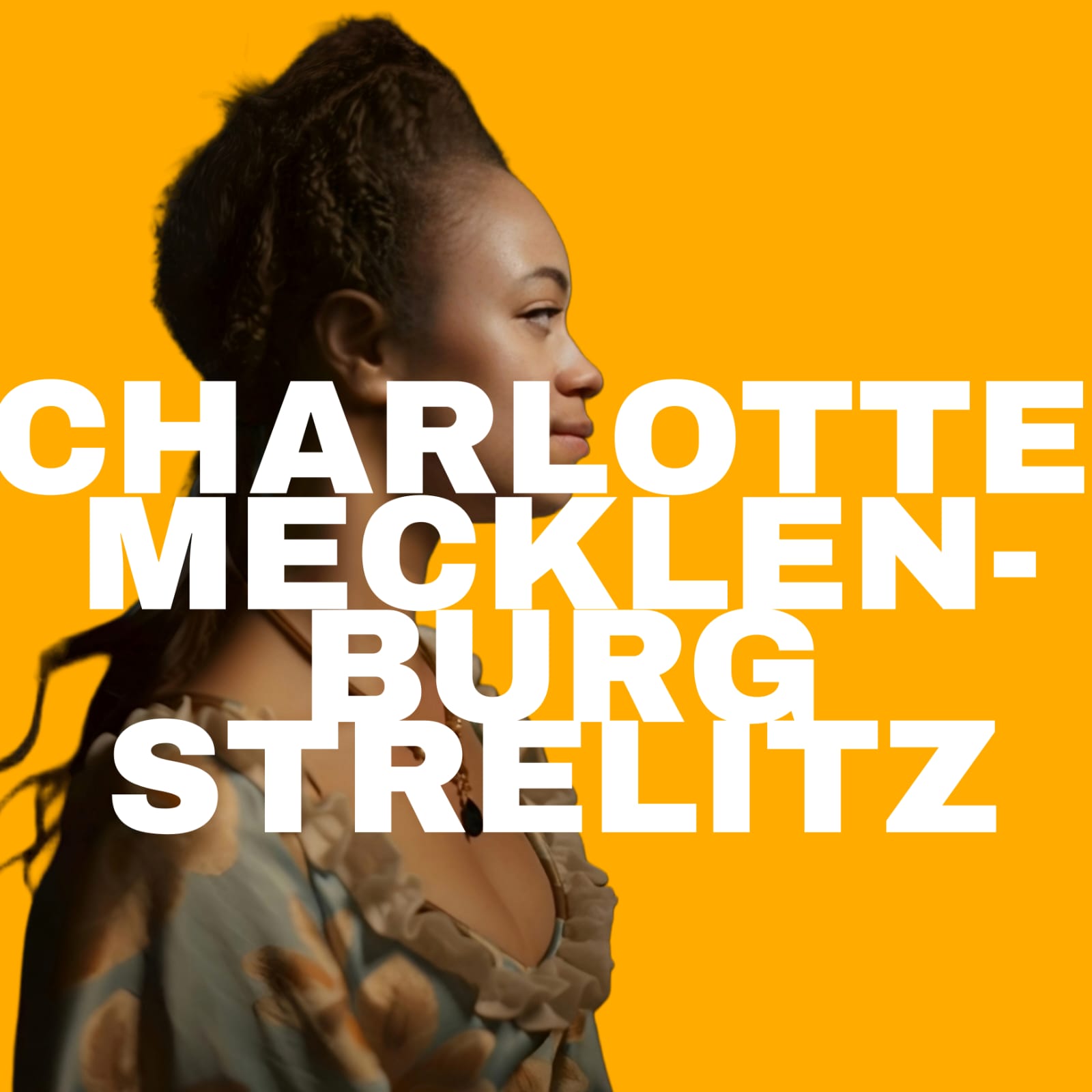
The final reconstruction presents Queen Charlotte not as a modern political statement, but as a restoration of a historical figure. She is shown with light brown skin, full lips, a broad nose, and naturally textured, curled hair styled in an eighteenth-century coiffure. This image corresponds directly to Baron Stockmar’s reference to a “mulatto face”, Walpole’s observations on her wide features, and the honest brushwork of Allan Ramsay. It provides a logical explanation for the anomalies in her portrait history and stands as a visual testament to the rich, complex, and multicultural tapestry of European nobility—a reality later edited out of historical memory. This Queen Charlotte invites the viewer to look beyond the whitewashed canon and acknowledge a more accurate, and more revealing, past.

Leave a Reply