
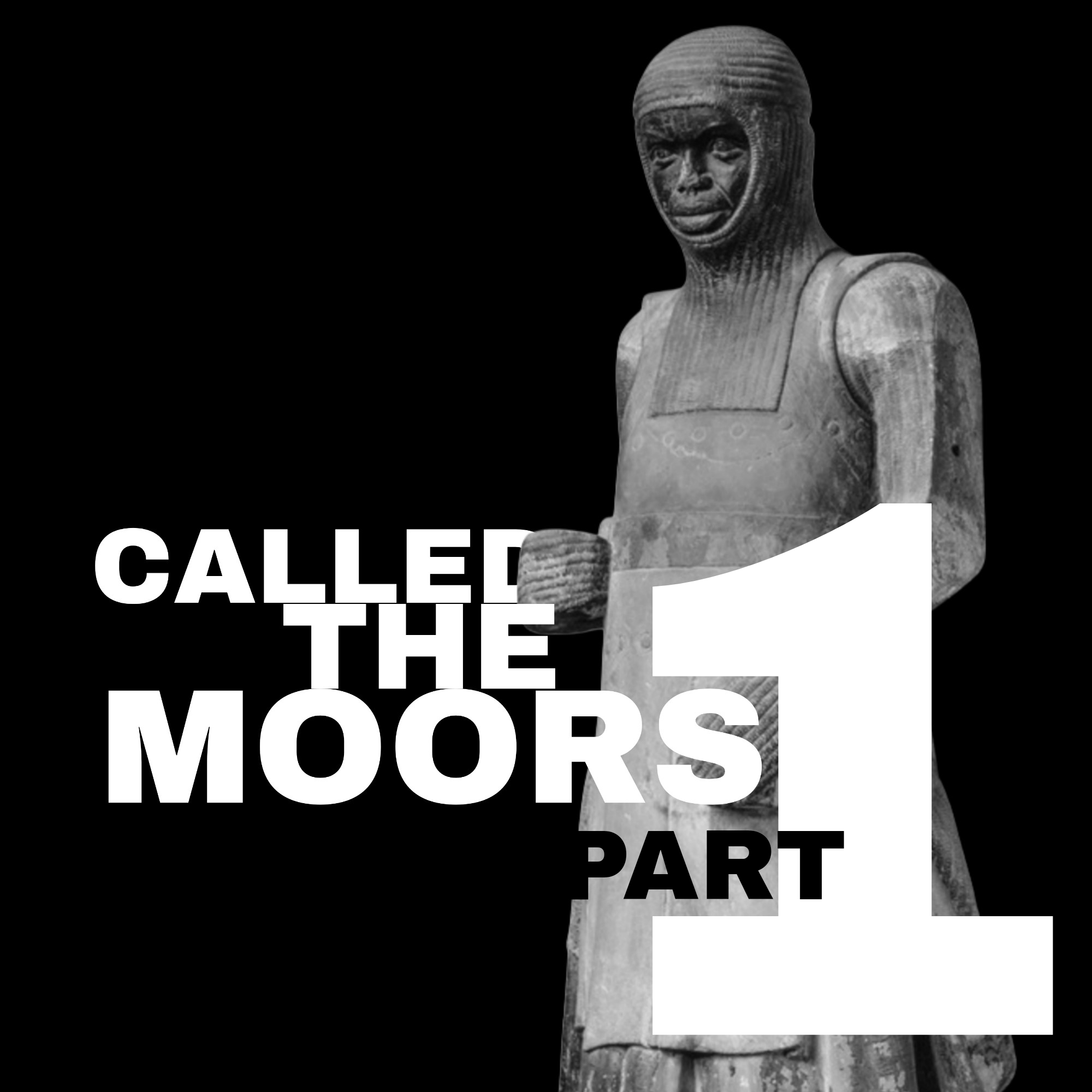
content derived from the work of Kaprooki
Introduction
Original source video
History is often viewed through the lens of our emotional attachments rather than objective evidence. To truly understand the past, we must separate fact from sentiment. This exploration reveals the overlooked story of the Moors—a predominantly Black African people whose influence shaped medieval Europe in ways that heraldry, historical accounts, and genetic studies continue to prove, despite modern attempts to obscure their identity. The depth of their impact becomes even more striking when we examine the full breadth of evidence preserved in medieval records and artefacts.
The Moors: Identity and Origins
The term “Moor” has long been tied to Black Africans, though contemporary scholarship frequently muddies this connection. These were primarily African Muslims who embraced Islam during the Arab conquest of North Africa. While Arabs led the military campaigns, the Moorish population itself consisted largely of indigenous Black Africans. This reality is supported by multiple lines of evidence that paint a consistent picture across centuries.
Genetic research reveals that the Benin haplotype of the sickle cell trait appeared in Portuguese populations between the 8th and 13th centuries—directly coinciding with Moorish occupation, not Arab influence or the later transatlantic slave trade (Journal of Human Biology, 1992). This finding is particularly significant because, as Robin Walker notes, had the Islamic culture been predominantly Arab, we would expect to find the Asian and Arab haplotype instead. The clear presence of the Benin haplotype confirms the Black African identity of the majority of Moors who entered Europe during this period.
Contemporary observers left no doubt about the Moors’ appearance. Medieval writers like Isidore of Seville explicitly described them as “black as pitch” in his Etymology, while the poet Flavius Chrysonius Corippus wrote of faces “fearful in their black colour” during the Libyan Wars. These descriptions take on greater significance when we consider how later translations have attempted to soften this language, with “black” becoming “dark” in many modern editions—a subtle but telling alteration that reflects ongoing efforts to distance the Moors from their African identity.
Even language itself preserves this truth. The Latin Maurus and Greek terms for Moors were interchangeable with “Negro,” a connection Shakespeare reinforced in Othello and Christopher Marlowe echoed in Lust’s Dominion (J.A. Rogers, Nature Knows No Colour Line). This linguistic evidence is further supported by Sir William Smith’s Dictionary of Greek and Roman Geography, which notes that “Mauritania, inhabited by Black populations, was later called Negresia,” making clear that “Moor” and “Negro” were equivalent terms in classical antiquity.
Moorish Conquest of Europe
The year 711 CE marked a turning point when the Black African general Tariq ibn Ziyad led 6,700 Moorish and Berber soldiers across the Strait of Gibraltar. His decisive victory over Visigothic King Roderick opened the floodgates for Moorish domination of the Iberian Peninsula (Professor Scobie, The Moors and Portugal’s Global Expansion). The contemporary European account preserved in Professor Scobie’s work describes the Moorish warriors in vivid terms: “The reins of their horses were as fire, their faces black as pitch, their eyes shone like burning candles, their horses were swift as leopards and the riders fiercer than a wolf in a sheepfold at night.”
What followed was no mere military campaign, but a cultural transformation. As chroniclers like Bronson and Rashidi recorded, Africans arrived in such numbers that “some are said to have floated over on tree trunks” (The Moors in Antiquity). Their arrival coincided with Europe’s so-called Dark Ages—a period of such profound deterioration that historian Robert Briffault described 10th-century Europeans as dwelling in huts amid Roman ruins, with documented cases of cannibalism during famines (Rational Evolution, 1930). Joseph McCabe’s research confirms this stark contrast, noting that while Europe languished, “the Arabs, the Moors, had a splendid civilisation in Spain, Sicily, Egypt and Persia, and it linked on to those of India and China” (The New Science and the Story of Evolution).
The demographic impact of this migration was substantial enough to leave genetic markers still detectable today. The 1992 study in the Journal of Human Biology identified two distinct waves of sickle cell introduction into Portugal—the first during Moorish occupation (8th-13th centuries) carrying the Benin haplotype, and the second during the transatlantic slave trade carrying Senegalese and Bantu haplotypes. This clear genetic timeline provides irrefutable evidence of significant Black African presence in medieval Europe.
Moorish Iconography in European Heraldry


The physical presence of Moors in Europe became permanently etched in the visual language of power—medieval heraldry. The Gelre Armorial of 1396, compiled by Klaus Heinenzin, contains some 1,800 coats of arms from across Europe and stands as one of the most important sources for medieval heraldic study. A close examination reveals 41 clearly African faces among 117 human representations, nearly matching the 45 Caucasian portrayals—a ratio that speaks volumes about Moorish integration into European nobility.
These heraldic representations weren’t abstract symbols but reflected real social and political relationships. The case of Alessandro de’ Medici, Duke of Florence nicknamed Il Moro, demonstrates how Moorish ancestry existed at the highest levels of European power (Marcus Hattstein, Spanish Umayyads). His mother was documented as Simonetta da Collevecchio, an African woman, making the Medici—one of Renaissance Europe’s most powerful families—a clear example of Moorish lineage in European nobility.

The prevalence of Moorish imagery extended beyond individual families to entire cities and regions. Southern German states like Bavaria featured Moorish figures prominently in municipal crests, while the arms of English politician Colonel Silius Titus and French knight Jean III de Grailly incorporated similar iconography. Conrad von Grunenberg’s 1480 armorial documented these symbols among “barons, dukes, margraves, archbishops, free cities and towns, and orders of knights from throughout Germany,” showing how deeply this imagery was woven into Europe’s visual culture of power.
Misrepresentation and Modern Scholarship
Despite this overwhelming evidence, a curious pattern emerges in contemporary academia that mirrors earlier historical distortions. The original Latin text of Flavius Chrysonius Corippus described Moorish faces as cognata tenebris… nigroque colore horrida (akin to darkness… fearful in black colour), yet modern translations frequently render this as simply “dark,” obscuring the explicit racial description. This linguistic dilution parallels broader trends in scholarship that minimise the African identity of the Moors.
Historian John G. Jackson identified this pattern, noting that while the Berbers (many of whom were Black Africans) vastly outnumbered Arabs in Moorish Spain, most histories emphasise Arab contributions (Introduction to African Civilisations). This selective focus creates a false impression of Moorish civilisation as fundamentally Arab rather than African-dominated. Marcus Hattstein’s research supports Jackson’s observation, clarifying that “the Arabs in Spain were mostly southern Arabs and Yemenites,” many of whom were themselves of African descent (Spanish Umayyads).
The resistance to acknowledging Moorish Africa’s influence reflects deeper historical tensions. Just as American anti-miscegenation laws sought to control Black male sexuality, medieval European texts reveal both fear and fascination with Moorish influence. The 1657 pamphlet Killing No Murder by Colonel Titus—whose family crest featured Moorish imagery—demonstrates how these tensions persisted into early modern Europe. The same dichotomy appears today, where acknowledgment of Moorish achievements often comes with quiet resistance to their Black identity.
Conclusion
The cumulative evidence from genetics, heraldry, and primary historical accounts leaves little room for debate: the Moors who transformed medieval Europe were overwhelmingly Black Africans. Their genetic legacy persists in Iberian haplogroups, their faces gaze from centuries-old coats of arms, and their cultural impact outshone a European Dark Ages. As Robin Walker concluded from the genetic evidence, Moorish Spain represented “largely a Negro achievement”—a truth that modern scholarship must stop qualifying.
When we examine the Gelre Armorial’s Black faces, read Corippus’s unsoftened Latin, or trace the Benin haplotype’s journey, we’re not just studying history. We’re reclaiming it from the distortions of those who find an African-dominated medieval Europe somehow inconceivable. The records have always been clear—from the 11th century Song of Roland describing Moors as “black as molten pitch” to the DNA evidence confirming their demographic impact. What remains is for modern scholarship to confront these facts without reservation, acknowledging the full measure of Africa’s contribution to European civilisation. Only then can we truly understand the complex tapestry of our shared past.

Leave a Reply