
Introduction
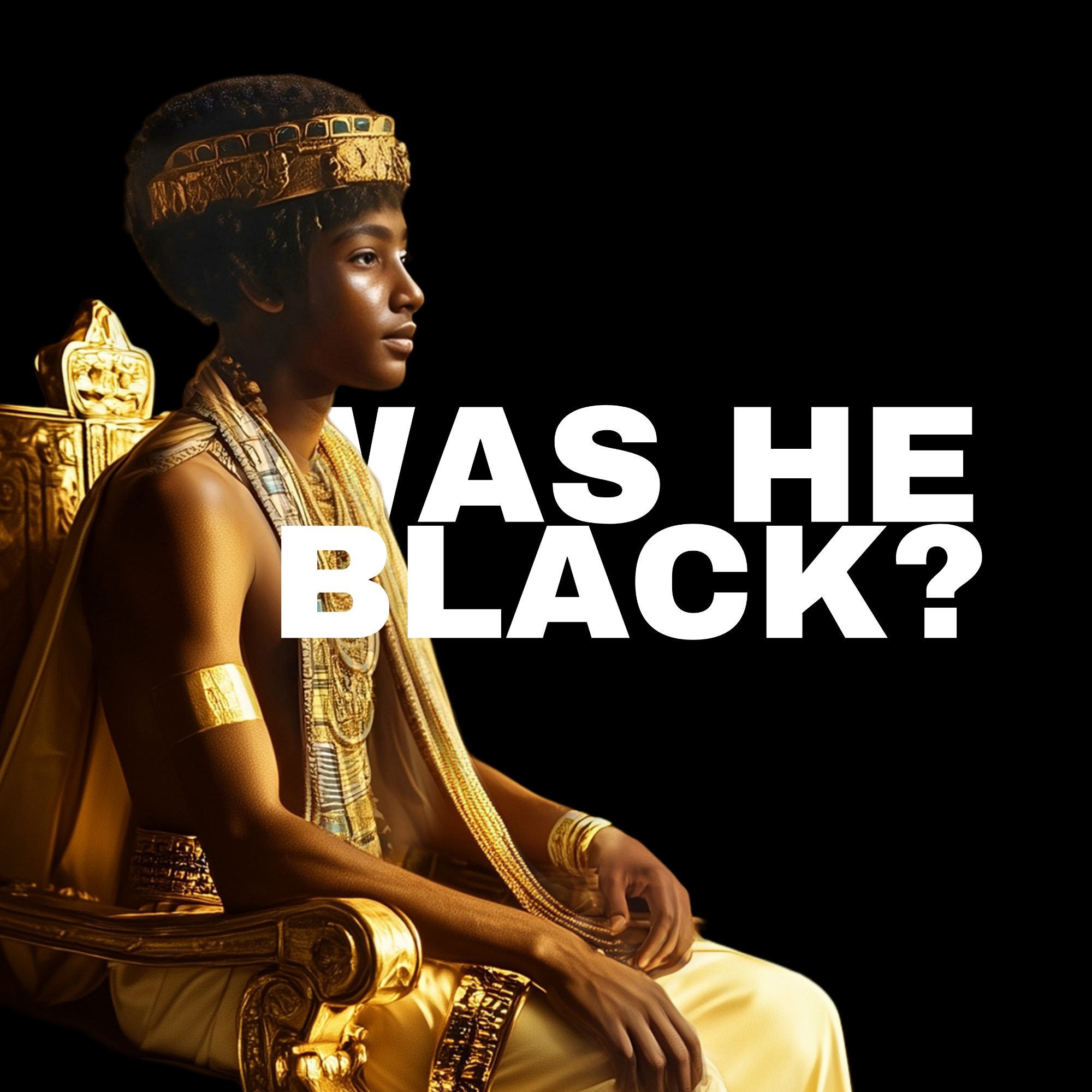
King Tutankhamun is easily one of the most recognisable names of the ancient world, but in spite of being one of the most portrayed individuals in ancient history, the true appearance of this New Kingdom ruler has remained a mystery to the general public. His intact tomb was discovered by archaeologist Howard Carter in 1922. This novel find uncovered a treasure trove of pristine relics and artwork, included in this archaeological jackpot: close to 400 portrayals of the young king. However, in spite of uncovering the most comprehensive collection of life-size statues, statuettes, mannequins, sculptures, jars, chests, and thrones—all depicting the young king—these portraits are cumulatively ignored by the experts who instead opt to bypass the artistic and scientific data in favour of appeasing the sensibilities of Eurocentrism and modern Arabism that continue to dictate the tropes of Egyptology.
Artistic Depictions
Notable pieces include the head of Nefertem, portraying the king in his youth, his famous wooden mannequin—a life-sized depiction of the young king in vivid and realistic colour—we also have the Golden Throne, one of the few relics to have preserved full colour and detail without degradation, not to mention multiple statues and shawabtis (ushabtis), all bearing the same striking features, albeit at different stages in the young king’s life.
There is an important detail on all of the life-size depictions of the king that complements the consistent use of dark tones that lie between a dark reddish chocolate brown and a deep black to depict him. The careful detailing of the sclera in the eyes is a common trend used in his art, which intensified in his older portraits. This is significant because it is a unique condition linked to a buildup of melanin in Continental African populations. NewHealthAdvisor.org states: “Most Africans have high levels of melanin that result in yellow eyes. Melanin determines the colour of your skin, sclera, and eyes. When this concentration increases, the eye colour becomes light yellow or muddy brown.”
The ancient artists carefully captured this uniquely African trait in many portraits of the young king, placing him exclusively amongst the heavily melanated African populations. But that isn’t all.


Craniometric Evidence

In support of his portraits, the young king’s body possesses a uniquely regional physiognomy that paints an unambiguous mosaic of his ethno-cultural origins. Do we have enough information to infer which ethnic group or groups he may align closest to? Let’s explore this.
First, his skull exhibits strong dolichocephaly. Dolichocephaly is a measurement of the cephalic index gained by comparing the width of one’s skull in relation to the length when measured from a bird’s-eye view. When a skull has a long length and relatively narrow width, it is classed as dolichocephalic—the technical name used to describe that infamously long head shape that King Tutankhamun has become renowned for. The alternative head shape is brachycephalic or round-skulled, which denotes a skull where length and width are much more closely aligned.
The dolichocephalic head shape is prolific amongst modern African populations, along with a scattering of ethnicities in the Middle East who are confirmed to have a high degree of African admixture. However, it is notably rare among the vast majority of Eurasian populations.
In a study conducted by Raymond Dart on 2,861 skulls from the Predynastic to the Middle Kingdom of ancient Egypt, it was noted that only 1% of Predynastic Egyptian skulls were brachycephalic. This included just 1% of the 101 skulls from El Amra, less than 2% of the 314 skulls from Naqada, and none of the 79 skulls from El-Badari. From the 1st to the 12th Dynasties, brachycephaly barely exceeds 6%, and following a brief peak during the Intermediate Period, brachycephaly is under 2% during the Middle Kingdom.
These results are significant because they suggest that a disproportionate majority of the nearly 3,000 skulls measured were dolichocephalic or long-headed, with a strikingly high rate amongst the indigenous population. And this trait is consistent amongst even the pharaonic lineage of the New Kingdom, being seen in Thuya, Ramses, and obviously King Tutankhamun, among others.
Although this is somewhat overlooked in modern anthropology, a 2004 study by Isabelle Ribot, titled Differentiation of Modern Sub-Saharan African Populations: Craniometric Interpretations in Relation to Geography and History, highlights the benefit of utilising the cephalic index as a tool to identify populations because of its high heritability, stating: “Vault shape or cephalic index seems to have a higher heritability than the rest of the body or stature.”
So, in terms of anthropometrics or phenotype, the cephalic index is one of the most consistently inherited physical trait rates in human populations, which raises the question: Where in modern populations can we find comparable rates of dolichocephaly?

The answer, by now, should be unsurprising. Modern populations whose skulls produce a cephalic reading of below 75—which is what Tutankhamen’s mummy exhibits—are commonly seen throughout Africa, with a particular concentration along the Nile Valley. This is confirmed by Seligman, who states: “The Nandi and Turkana give a cephalic index of 73 to 74, which, being under 75, is dolichocephalic—i.e., the head is prominently long from forehead to back of head and narrower from side to side.”

This perspective is supported by anthropologist Caroline Wilkinson, who states regarding dolichocephaly: “The distance from the forehead to the back of the skull is long in relation to the overall height of the cranium, and that’s something that you see quite frequently in certain populations—one of which is ancient Egyptians. Another would be, um, Black African groups will also show that characteristic.”
These studies confirm dolichocephalic skulls at this rate are largely accepted to be an African phenomenon, although thankfully now researchers agree it is impossible to define Africans using a homogeneous lens like Seligman in 1959, who falsely defined the entire continent as dolichocephalic. This is incorrect since there are brachycephalic populations amongst the dolichocephalic ones and even more populations with a veritable mix of skull shapes. However, modern studies, as supported by Ribot, continue to attest dolichocephaly is only prominent at those rates amongst African groups, with a notably high frequency comparable to those seen in ancient Egypt amongst modern Nilotic African populations.
Dental and Facial Morphology

In addition to this craniometric evidence, Tutankhamen exhibits regional dental and facial morphology characterised by diastema, overjet, and overbite, coupled with mild prognathism, which are all exceedingly common amongst Africans, particularly in the same populations who are present along the Blue Nile and the White Nile in modern times.
For clarity:
- Diastema describes a gaping of the front teeth.
- Overjet describes an acute angling of the maxilla in contrast to the almost vertical angle seen in Eurasian populations.
- Overbite describes the protrusion of the upper jaw over the lower.
Researcher James Harris states: “Generally, the dentition of each New Kingdom pharaoh and queen represents a unique combination of dental characters, such as overbite, overjet, interincisal relationship, and molar relationship, which permits the identification of each mummy from the X-rays of the dentition alone. Dental alveolar prognathism—an inherited trait which is normal for the Nubian people, ancient and modern—may be observed in Pharaohs Thutmose I, Thutmose II, Siptah, and Merneptah, and most of the queens of the 21st Dynasty.”
It may be surprising to some that a combination of these traits is a common occurrence in East African Nilotic populations but doesn’t indicate dental malformation; rather, it is an expression of phenotype present in African cranio-morphology for thousands of years. Put simply, these are some of the facial traits that distinguish native African people from other groups.
Most African populations tend towards excellent dental health owing to thicker-than-normal tooth enamel and historic adherence to meticulous dental care routines. These routines date back several millennia, spanning the entire African continent.
In the research paper titled Anterior Tooth Relations in Kenyan Africans, Professor Jamilah Hassanali, when observing dental traits amongst the Kenyan populations, noted the highest prevalence of diastema was amongst the Maasai at 61.3%, of overbite at 84%, and overjet at 99%. It was found amongst the Kikuyu. This study echoes the typically high occurrences that such traits have amongst Nilotic Africans.
Indeed, King Tutankhamun exhibiting these traits in his teeth is far more likely to be an expression of his regional Africanity than the results of any alleged health conditions. The young king’s teeth, like the rest of his skull, exhibit traits that are perfectly in situ amongst the modern populations of the Nile, who continue to express them in an identical manner to this very day.

Africans tend to have thicker and fuller lips and features that perfectly and naturally house the maxillary tilt and overbite. The same would have been the case for the young king. His portraits perfectly portray the reality of these traits when exhibited in native African populations. His overbite and overjet naturally fell behind his full lips rather than protruding between them, as seen in many recent reconstruction attempts that misunderstand African physiognomy.
Anthropometric Evidence


Now that we’ve discussed his skull, are there any more clues we can gather from the body of the king? This brings us into a field of study called anthropometrics. Strictly speaking, anthropometry is the scientific study concerned with the measurements and proportions of the human body. In terms of our investigation into the phenotypic traits that exist between ethnicities, it remains really the only field able to yield definitive results that will help us determine the ethnicity of the boy king.
In the case of King Tutankhamen, anthropometrically speaking, his body has been defined as “super negroid.” This is the description given to the limb ratios found almost exclusively amongst tropical Africans and the African diaspora.
In summary, the differences seen in tropical Africans when compared to European and Asian groups are characterised by a comparatively shorter torso, a much
In the study titled The Physical Proportions and Living Stature of New Kingdom Pharaohs, Egyptologist Professor Gay Robins concluded that the limbs of the pharaohs, like those of other ancient Egyptians, had negroid characteristics in that the distal segments were relatively long in comparison to the proximal segments.

Further to this, this table of tibio-femoral indices shows how little the bodily proportions of the pharaohs deviate from modern Black Africans in relation to White Eurasians, allowing researchers to accurately estimate bone lengths and bodily proportions from a single bone utilising the “Negro equations.”
The significance of this cannot be understated. The study proved that ancient Egyptian rulers had identical limb proportions to those seen in modern East Africans—much like the distance runners of East Africa, renowned for exactly what you can see exhibited on the artwork and on the mummies of the ancients, with no better example than on the body and statues of Tutankhamen himself, who, according to Robins, was anthropometrically “super African.”
So much so that when the Negro equations were used to calculate the height of the king based on separate measurements of his femur, tibia, and humerus, it was found that all three estimations produced exactly the same height estimate of 1.69 m, substantiating the efficacy of the Negro equation and proving that his body was proportionally a precise match to other Black Africans of the same height.
Running these same estimations with a non-African would have produced three very different height estimates. This means the distal segments of the king’s body could only produce a proportionate Black African or Negroid body and thus were not compatible to produce any kind of proportionate Eurasian.


Genetic Evidence
The final area of investigation concerns genetics. This area is particularly loaded with substantial misrepresentations and false conclusions being drawn from very limited data and inadequate sampling around the subject of ancient Egypt as a whole.
Some recent poorly conducted studies have attempted to associate ancient Egyptians with Near Eastern origins by sampling from burial grounds occupied by foreigners and drawing conclusions about race and affinity by the deliberate misclassification of markers. However, we will focus on the few studies that have provided us with data about Tutankhamen himself.
These studies utilise autosomal or whole-genome DNA, giving us a much richer picture of the subjects tested. From 2012 through to 2018, different independent researchers utilised the STR markers obtained from the Amarna lineage by Zahi Hawass and his team.
The 2010 study titled Ancestry and Pathology in King Tutankhamen’s Family is one of very few studies to publish verifiable genetic data from actual pharaonic lineages and thus leaves no ambiguity regarding the authenticity of the specimens being sampled—they are confirmed as native Egyptians.
The study sought to establish the relationships between the examined royal mummies from the 18th Dynasty. It has been noted in numerous studies that the power of STR analysis comes from looking at multiple STR loci simultaneously.
A short tandem repeat (STR) is a region of DNA composed of a short sequence of nucleotides repeated many times. Since the number of repeated sequences in a given STR varies from person to person, pinpointing these variants can be useful in DNA fingerprinting.
As the name implies, the repeated stretches in STRs are short—only two to 10 base pairs long. For this reason, and because they are dispersed more evenly throughout the genome than the longer variable number tandem repeats (VNTRs), STRs are favoured by forensic labs.
Large databases of information on STRs in the general population tell analysts how much variation exists at any given STR location. That information can help forensic analysts determine the conclusiveness of a match between two samples.
If 10% of people have the same number of repeats at a given STR, for example, finding a match at that site is merely suggestive that two samples are a match. If two sites with the same prevalence match, the odds drop to one in 100 that the similarity is coincidental. If 13 sites match, the odds that any two people would possess such a fingerprint are so small—about one in 10 trillion—that the result can be considered a definitive match.
Hence, in the publishing of this data, researchers were armed with the tools needed to narrow the field and effectively group this royal lineage alongside populations carrying a similar genetic signature.
Following this, in 2012 and 2014, independent DNA company DNA Tribes utilised the same DNA results that were published by Hawass and Co. during the 2010 study. They processed the DNA results through an extensive global database to establish his affinity with modern populations.
When the results of the Amarna lineage STR markers were run through this matching algorithm, they found that not only King Tutankhamen but all of the Amarna lineage possessed a substantial match affinity with indigenous Continental Black Africans.
Results indicated the autosomal STR profiles of the Amarna period mummies were most frequent in modern populations in several parts of Africa. These results are based on the eight STR markers for which these pharaonic mummies have been tested, which allow a preliminary geographical analysis for these individuals who lived in Egypt during the Amarna period of the 14th century BCE.
Although results do not necessarily suggest exclusively African ancestry, geographical analysis suggests ancestral links with neighbouring populations in Africa for the studied pharaonic mummies. If new data become available in the future, it might become possible to further clarify results and shed new light on the relationships of ancient individuals to modern populations.
Using the available data, the results of the analysis indicated that King Tutankhamen was 1,300 to 1,500 times more likely to find a match amongst southern region Africans than anywhere else in the world. Even more specifically, he was over 200 times more likely to be a genetic match to modern Africans in the Great Lakes region than modern North Africans currently residing in Egypt.

The results of the analysis carried out by DNA Tribes were objective and transparent, without agenda. It was based on published data, and it’s important to note the process is entirely repeatable by any organisation or researchers with access to an STR database.
Although it should be noted, since only eight out of 13 loci were obtained—which is a less-than-ideal range—this did present a limitation since results were not as robust as would have been achievable with more of the loci available. Hence, it was stated by the authors of the study:
“These regional matches do not necessarily indicate an exclusively African ancestry for the Amarna pharaonic family. However, results indicate these ancient individuals inherited some alleles that today are more frequent in populations of Africa than in other parts of the world, such as D8S5119 and D21S134.”
In summary, in spite of there still being the possibility of more or less additional outside contribution revealed by further loci, it is still clear that the Amarna lineage is significantly weighted towards signatures that are far more frequent in central, southern, and western Africa than anywhere else.
In support of this, in a further study titled Ancient Egyptian Genomes from Northern Egypt: Further Discussion, published by Jean-Philippe Gourdine et al. in 2018, researchers utilised the same genetic data but utilised a publicly available STR population database called PopAffiliator.

The analysis only confirmed what had already been identified by DNA Tribes. The analysis confirmed the Amarna lineage to be, on average, of 70 to 94% match probability to modern populations in central Africa, in comparison to a 0 to 31% match probability for Eurasian and Asian populations.
Once again, if we focus on the STR profile of King Tutankhamun, we find a 93.9% match probability for modern Central Africans in comparison to a 4.6% match probability with modern Eurasians and North Africans.
Conclusion
So, let’s consider all of the evidence in summation:
- First, we have his numerous portraits—in particular, those in which the colour is preserved.
- Next, his hyper-Nilotic craniometric traits exhibited in dolichocephaly, prognathism, overjet, overbite, and diastema.
- Then there are his limb proportions, which have been verified as “super negroid” and calculate perfectly within the negroid equation.
- Finally, we have the population match probability of his autosomal DNA results clustering significantly central and southern African.
In all this, and for the sake of brevity, we haven’t even investigated the notable cultural continuities seen in Tutankhamun’s artefacts that culturally align him to African populations. These include, but are not limited to:
- The leopard venerations seen in skins used for his burial and statuettes resembling those found in Continental Africa. These customs, formed and upheld by neighbouring Cushites, were seen in Tutankhamun’s Osiris wall relief and also continued by his successor, King Ay.
- Headrests seen only amongst other Continental Africans—he possessed over a dozen of these tools that protected his ethno-trichological crowns, amongst other things. (There is a documentary on this channel regarding that subject.)
- Sacred stools as heirlooms continue to be a practice of African nobility to this day and were the same for Tutankhamun.
- Aside from his beloved khepresh, Tutankhamun favoured and was indeed buried in a beaded skull cap, which was the preference of the 25th Dynasty Nubian rulers. This crown shape was linked to a long tradition of ethno-trichology that continues on the African continent to this day.
There is also the case of the appearance of his closest relatives that we also haven’t had the opportunity to explore. Very little mental or physical gymnastics are required to place this King Tutankhamun amongst the populations that live along the Nile to this very day. It is these same populations who just happen to share all of the discussed physical, genetic, and cultural traits with the king.
Are we able to confidently make an educated conclusion with a good degree of certainty regarding ethnicity? The data suggests that physically, he was a typical—almost stereotypical—Nilotic African. In this view, the question of which racial category he belongs becomes entirely irrelevant. After all, it is a modern question with a loaded agenda and a century of dishonesty preceding it.

Leave a Reply