
Introduction
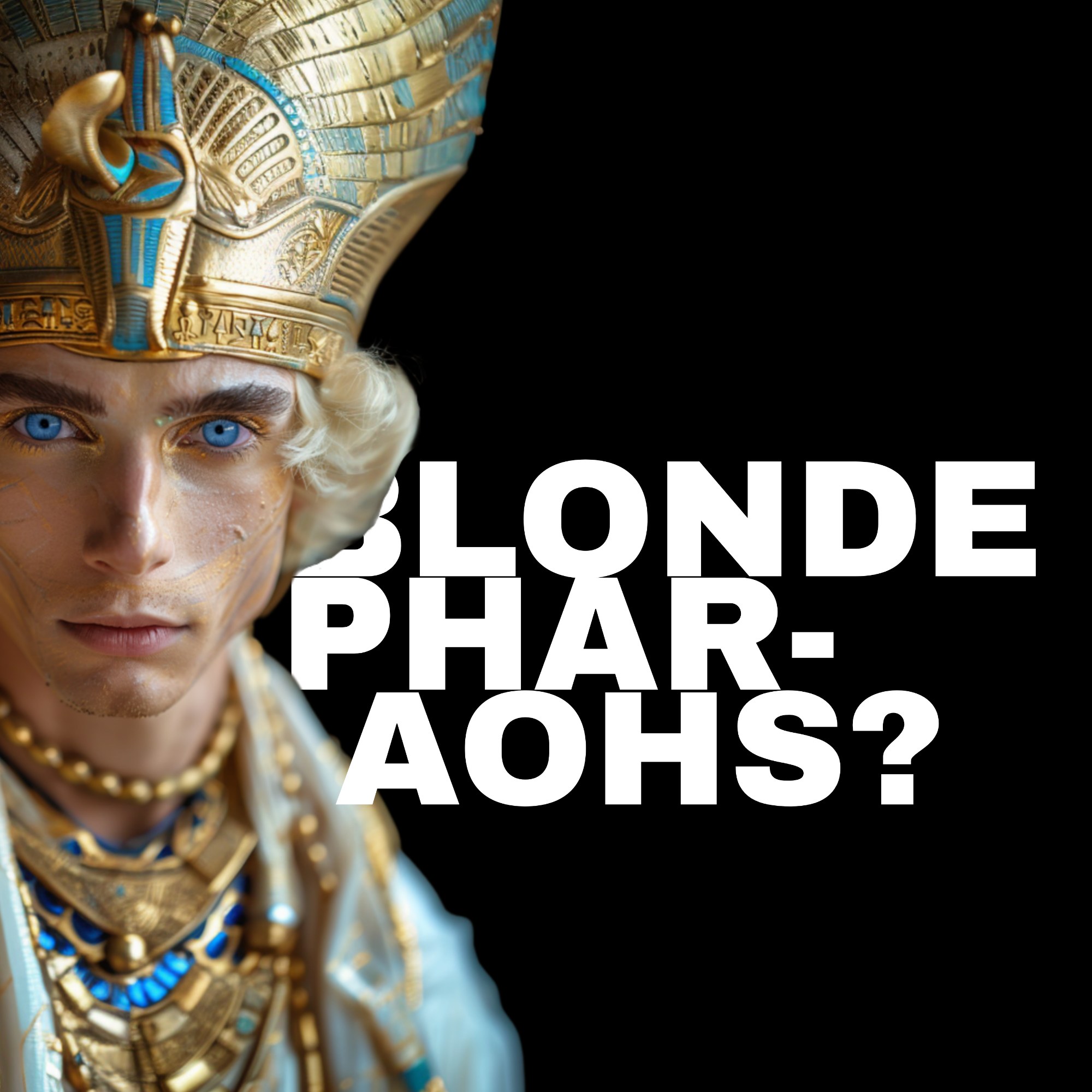
The claim that ancient Egyptian mummies, such as Ramses II and Hiya, were Nordic or white Europeans due to their hair color and texture has been a topic of debate among Eurocentric scholars and online trolls. This article systematically addresses these claims by examining the mummification process, the preservation of skin and hair, and the biochemical factors that influence hair color. The evidence overwhelmingly supports the African identity of these mummies, refuting the notion of a Nordic or European origin.
The Skin Color of Egyptian Mummies


One of the most persistent arguments made by Eurocentric scholars is that the dark skin of Egyptian mummies results from humidity and partial decomposition. However, this claim is scientifically unfounded. Mummification halts the decomposition process entirely; a body is either mummified or decomposing—it cannot be both. The dark skin observed in mummies is consistent to being a natural representative of their natural pigmentation during life.
Scientific studies support this conclusion. Cheikh Anta Diop developed a melanin dosage test that demonstrated Egyptian mummies possessed melanin levels too high to be of European descent (Diop, 1974). Additionally, a study by Maria Mekota et al. involving rehydrated mummy tissue found melanin concentrations consistent with populations of Negroid origin (Mekota & Vermehren, 2005). These findings directly contradict claims that the mummies’ pigmentation resulted from post-mortem changes.
“During an excavation headed by the German Institute for Archaeology, Cairo, at the tombs of the nobles in Thebes‑West, Upper Egypt, three types of tissues from different mummies were sampled to compare 13 well known rehydration methods for mummified tissue with three newly developed methods. … Skin sections showed particularly good tissue preservation, although cellular outlines were never distinct. Although much of the epidermis had already separated from the dermis, the remaining epidermis often was preserved well (Fig. 1). The basal epithelial cells were packed with melanin as expected for specimens of Negroid origin.” Quote from Mekota, A. M. & Vermehren, M. (2005). Determination of optimal rehydration, fixation and staining methods for histological and immunohistochemical analysis of mummified soft tissues. Biotechnic & Histochemistry, 80(1), 7–13. doi:10.1080/10520290500051146


Comparisons with mummified remains from other regions, such as Asia, further disprove this claim. In all documented cases of mummification worldwide, skin color remains preserved. There is no logical reason to assume that Egyptian mummies alone underwent a post-mortem change in pigmentation due to environmental factors.


The Shape and Features of Mummies
The mummification process involves the removal of organs and the desiccation of the body using salts, which draws out moisture. A key part of this process was brain extraction, which was typically performed by inserting hooks through the nostrils to pull out brain matter in fragments. This procedure often caused damage or deformation to the nasal structure, contributing to the altered appearance of mummies’ noses.


Since the human body is approximately 80% water, the desiccation process significantly alters its volume and shape, particularly in the face. Features such as lips and noses collapse as the skin adheres to the skeletal structure. The combined effects of brain extraction and natural desiccation mean that the nasal appearance of mummies cannot be reliably used to determine their original facial features. See more on this.
Eurocentric claims that certain mummies, like Ramses II, had “European” features such as a hooked nose are misleading. The apparent shape of a mummy’s nose results from both the mummification process and post-mortem collapse, not an accurate representation of the individual’s living appearance. Attempts to assign European features to Egyptian mummies are baseless, especially given the diversity of African phenotypes, which encompass a wide range of traits. Read more on this.
Hair Texture and the Effects of Mummification


Some mummies have been found with straight or wavy hair, which has been erroneously cited as evidence of European ancestry. However, this straightening is an artifact of the mummification process. Resins applied during embalming, combined with tight wrapping, act as a straightening agent, much like modern hair-styling techniques.
For example, African hair can be straightened using pomades and wraps (such as a do-rag), and the prolonged application of resins over millennia would have a similar effect. The straight hair observed in some mummies is not natural but a result of these artificial processes.


Female mummies, such as Queen Tiye, often exhibit braided or plaited hair. When these braids loosen over time due to exposure, the hair takes on a wavy appearance, known as a “braid-out.” This further demonstrates that hair texture in mummies is not indicative of ethnicity but of post-mortem treatment and preservation.
Hair Color: Biochemical Instability and Environmental Factors
A common misconception is that all Africans have black hair. In reality, African hair ranges from very dark brown to medium brown, and sun exposure can lighten it further. Hair color is determined by two types of melanin: eumelanin (responsible for black and brown hues) and pheomelanin (responsible for red and blonde hues). Eumelanin is dominant and more biochemically stable than pheomelanin but prone to down under oxidative stress such as UV exposure.
The reddish or blonde hair observed in mummies like Ramses II and Thuya is not evidence of Nordic ancestry but a result of eumelanin degradation over time. When Queen Tiye’s mummy was discovered, her hair had turned brown due to prolonged exposure to the elements. Similarly, the extreme yellow or blonde hues in some mummies are the result of oxidative processes, not natural pigmentation.
Conclusion
The claims that ancient Egyptian mummies were Nordic or white Europeans are rooted in misinformation and Eurocentric bias. Scientific analysis of the mummification process, skin preservation, and hair biochemistry confirms that these individuals were of African descent. The diversity of African phenotypes encompasses a wide range of features, making it unnecessary to invoke European ancestry to explain their appearance.
By debunking these myths, we reaffirm the African identity of ancient Egypt and challenge the persistent attempts to rewrite its history. The evidence is clear: Egyptian mummies are African, and their study should be grounded in facts rather than racialized speculation.
References
- Diop, C. A. (1974). The African Origin of Civilization: Myth or Reality. Lawrence Hill Books.
- Mekota, A. M., & Vermehren, M. (2005). “Determination of optimal rehydration, fixation and staining methods for histological and immunohistochemical analysis of mummified soft tissues.” Biotechnic & Histochemistry, 80(1), 7-13.

Leave a Reply