
1. Selection of Source Material


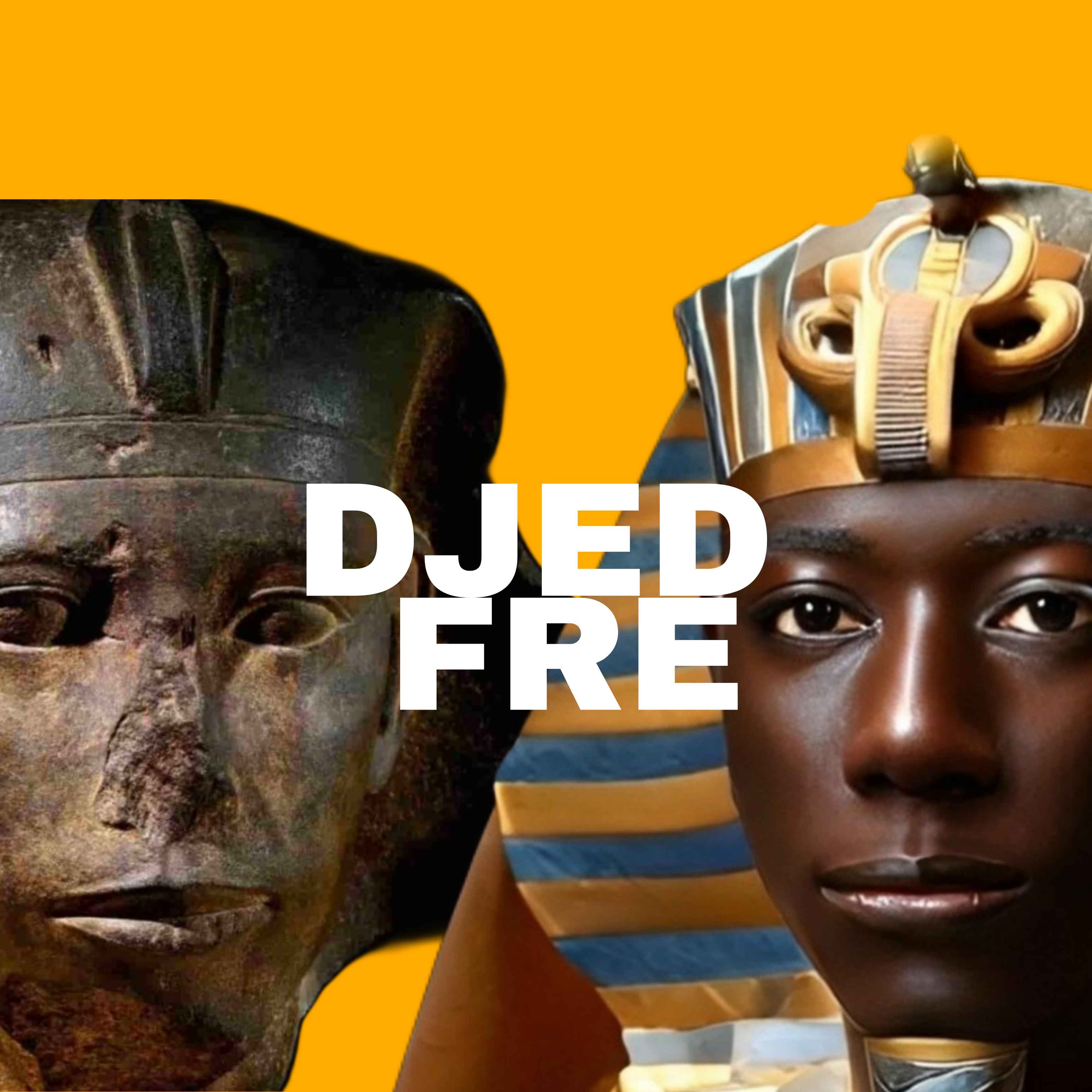
The reconstruction of Pharaoh Djedfre relied primarily on a single surviving bust, as artefacts from his reign are scarce. The bust exhibits distinctly African features, including a wide mouth and full, protruding lips. While the nose is missing—a common issue with ancient Egyptian statues—the remaining facial structure provided a strong foundation for the reconstruction. Additional context was drawn from statues of other Fourth Dynasty pharaohs, such as Khafre and Menkaure, whose familial resemblances suggested consistent phenotypic traits.

2. Restoration of Damaged Artefacts
The bust of Djedfre, like many others, shows signs of deliberate damage, particularly the missing nose. This absence required careful consideration, as the nose is a defining feature in facial reconstructions. To address this, comparisons were made with intact statues of his relatives, such as Khafre and Menkaure, who share similar broad nasal structures and full lips. This approach ensured the reconstruction remained faithful to the artistic and biological trends of the Fourth Dynasty.


3. Phenotype Analysis
Djedfre’s facial features align unmistakably with African phenotypes. The bust reveals a strongly prognathic jaw, wide mouth, and full lips—traits consistent with populations indigenous to the Nile Valley. The alveolar region (the area above the upper lip) is notably pronounced, further emphasising these characteristics. Such traits are rarely found in non-African populations, reinforcing the pharaoh’s Africanness. The reconstruction deliberately avoided exaggerating these features, adhering strictly to the proportions observed in the original artefact.
4. Overlay Technique

To validate the accuracy of the reconstruction, an overlay technique was employed. The reconstructed face was superimposed onto the original bust, revealing a near-perfect alignment of key features, such as the mouth and jawline. This method confirmed that no artistic liberties were taken; the reconstruction simply brought to life what the statue already depicted. The only deviation was the addition of a nose, which was modelled after those of Djedfre’s dynastic successors to maintain consistency.
5. Historical and Anthropological Context

Djedfre ruled during the Fourth Dynasty, a period marked by the construction of iconic pyramids. His own pyramid, located at Abu Rawash, now lies in ruins, with only its foundation remaining. The destruction of his monuments mirrors the fate of many Old Kingdom artefacts, often attributed to later occupiers of Egypt who repurposed or vandalised them. Historically, Djedfre’s reign is overshadowed by his more famous relatives, but his bust provides invaluable insight into the physical appearance of Egypt’s early rulers.
6. Iterative Refinement
The reconstruction process involved multiple iterations to ensure fidelity to the source material. Initial drafts focused on capturing the bust’s pronounced lips and wide mouth, while later versions refined the nasal structure based on comparative analysis. The final reconstruction emerged as a cohesive representation, balancing anatomical accuracy with the artistic style of Old Kingdom statuary.
7. Final Presentation


The completed reconstruction presents Djedfre as a dark-skinned African man with broad facial features, consistent with both the surviving bust and the broader phenotypic trends of the Fourth Dynasty. Side-by-side comparisons with the original artefact highlight the meticulous attention to detail, particularly in the lips and jawline. The result is a lifelike portrayal that challenges Eurocentric narratives, offering a visually compelling argument for the Africanness of Egypt’s early pharaohs.
This reconstruction not only honours Djedfre’s legacy but also contributes to a growing body of work that reaffirms the cultural and biological roots of ancient Egypt.

Leave a Reply