
1. Selection of Source Material


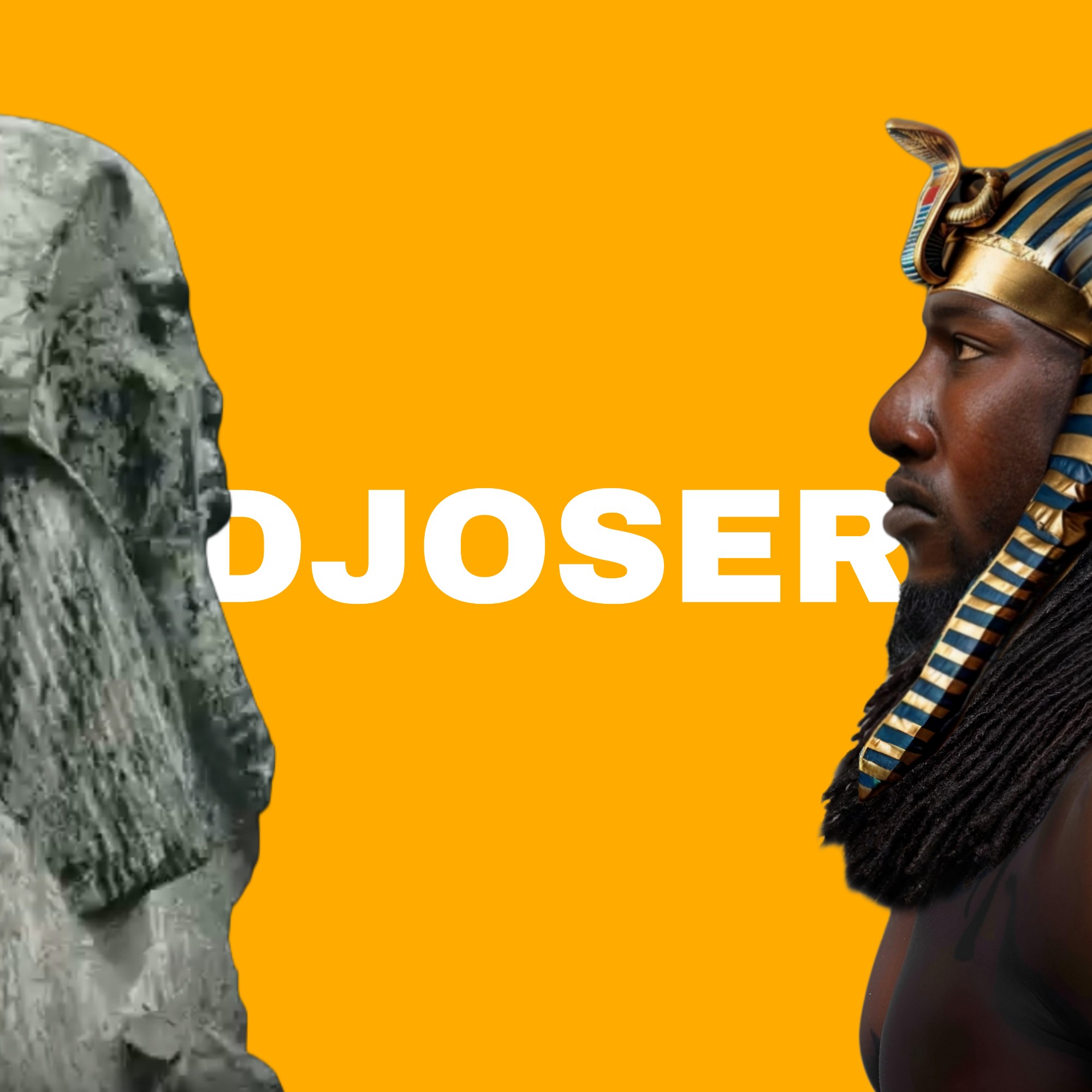
The reconstruction process began with a thorough examination of available artefacts depicting Pharaoh Djoser, including statues and stelae. Initially, the primary reference was a damaged statue missing key facial features such as the nose and eyes. Later, additional artwork was discovered in the book Egypt Revisited, which provided more comprehensive representations of Djoser’s likeness. These newly found images significantly altered the trajectory of the reconstruction, offering clearer insights into his facial structure, particularly his nose.

2. Restoration of Damaged Artefacts
The original statue of Djoser exhibited significant damage, with the nose and eyes entirely missing. To address this, the reconstruction focused on prominent surviving features such as the cheeks, brow, mouth, and signature locks. The base of the nostrils, though partially intact, provided critical clues for determining the width of the nose. The discovery of additional stelae later corroborated these details, allowing for a more accurate restoration of the nasal structure.
3. Phenotype Analysis
Pharaoh Djoser’s statue immediately suggested an African phenotype, characterised by broad facial features consistent with continental African diversity. The reconstruction emphasised these traits, distinguishing them from the narrower phenotypes often associated with later periods like the New Kingdom. The analysis acknowledged the full spectrum of African phenotypes, noting that certain features are exclusive to African populations. This approach ensured the reconstruction honoured Djoser’s likely appearance as an Old Kingdom ruler. Finding phenotypic continuity among living African populations has not been difficult.


A Nigerian medical laboratory scientist and model
4. Overlay Technique


The reconstruction employed an overlay technique to align the restored features with the original artefacts. Initial attempts to recreate the nose were revised after discovering additional stelae, which provided definitive evidence of its shape. The new nasal structure influenced other facial features, such as lip protrusion, bringing the reconstruction closer to the artistic representations. Digital tools were used to iteratively refine the alignment, ensuring consistency with both the statue and the stelae.
5. Historical and Anthropological Context
The project contextualised Djoser within the broader framework of African phenotypic diversity, emphasising the Old Kingdom’s distinct aesthetic compared to later periods. The reconstruction challenged Eurocentric narratives by highlighting African features often overlooked in historical interpretations. By focusing on Djoser’s role as the pharaoh associated with the Step Pyramid of Djoser, the project underscored the cultural and historical significance of accurate representation.
6. Iterative Refinement


later versions
The reconstruction underwent multiple iterations to achieve accuracy. The initial version, based solely on the damaged statue, was revised after the discovery of additional artwork. The nose, in particular, was refined to match the stelae’s depictions, which in turn affected other facial features. This iterative process ensured the final reconstruction was faithful to all available sources.
7. Final Presentation


The completed reconstruction of Pharaoh Djoser combined artistic interpretation with rigorous analysis of historical artefacts. The result honoured the original statue’s features while incorporating newly discovered details from stelae. The project marked a significant contribution to the field, as it may be the first widely circulated reconstruction of Djoser. The final image was shared with the public to promote awareness of Africa’s rich historical legacy and challenge misconceptions about ancient Egyptian identity.

Leave a Reply