How the reverence of Africa’s native cattle can be tracked through time to the advent of Ancient Egypt
Prefer to Watch? This video details what’s being discussed in this article.
‘The traditional dances of Amaraba, Intore and Igishakamaba are a veneration of the ancient practise of cattle domestication Central East Africa. The Ankore cattle, a symbol of wealth and status across many African cultures, inspire variations of this dance, wherever they are domesticated.’
Andrew Adetitun-King
Introduction
What if the oldest dance in the world was still being performed today?
In the heart of Central & East Africa, among the pastoralist communities of Uganda, Rwanda, and Burundi, an ancient dance has survived the test of time. Known as Igishakamba in Uganda and Amaraba in Rwanda, this elegant performance is more than mere entertainment—it is a living tribute to the Ankole (also known as ‘Ankore’) cow, a sacred and majestic breed that has shaped the region’s history, economy, and identity for millennia.
But what if this dance, deeply tied to the Ankole cattle, has roots that stretch back over 6,000 years? A single artefact—a terracotta figurine from predynastic Egypt—may hold the answer. Housed in the Brooklyn Museum, this ancient sculpture, depicting a woman in a distinctive raised-arm pose, bears an uncanny resemblance to the dancers of the Great Lakes region today. Could this be evidence of Africa’s longest-surviving cultural tradition? Let’s explore.
The Ancient Ankole Cattle is venerated in Africa
The Ankole-Watusi cattle is an iconic breed, known for their towering record-breaking horns and striking appearance; they are now bred as far afield as the United States. However, this derivative of Africa’s native Shanga cattle has its home in no other place but Central Africa and has been bred in the Great Lakes region of Africa for thousands of years. Among pastoralist groups such as the Bahima of Uganda and the Banyarwanda of Rwanda, these cattle hold deep cultural and economic significance. Unlike commercial cattle, the Ankole are rarely slaughtered for meat. Instead, they serve as a measure of wealth, a form of currency, and a marker of prestige and social rank. It is common for herders to know each cow by name, selecting names that reflect their beauty and personality.
In addition to being a symbol of status, the Ankole cow is sacred. These cattle are believed to bring blessings, fertility, and prosperity. Their graceful movements, their horns that curve like a dancer’s arms, and their role in social ceremonies have inspired generations of artists, poets, and performers—including the dancers of Igishakamba and Amaraba. Thankfully, these ancient dances are seeing a resurgence of popularity in Africa’s Great Lakes Region.
Igishakamba, Amaraba and Africa’s native celebration of Cattle
Across Rwanda, Uganda, and Burundi, traditional dances mirror the beauty of the Ankole cow. The dances are mirrored as far north as Sudan, west as the Congo and south as South Africa, where most African cultures practise their own variation of the same expression of cattle veneration.
Igishakamba (Uganda) and Amaraba (Rwanda) are performed with slow, flowing arm movements that resemble the curve of a cow’s horns.
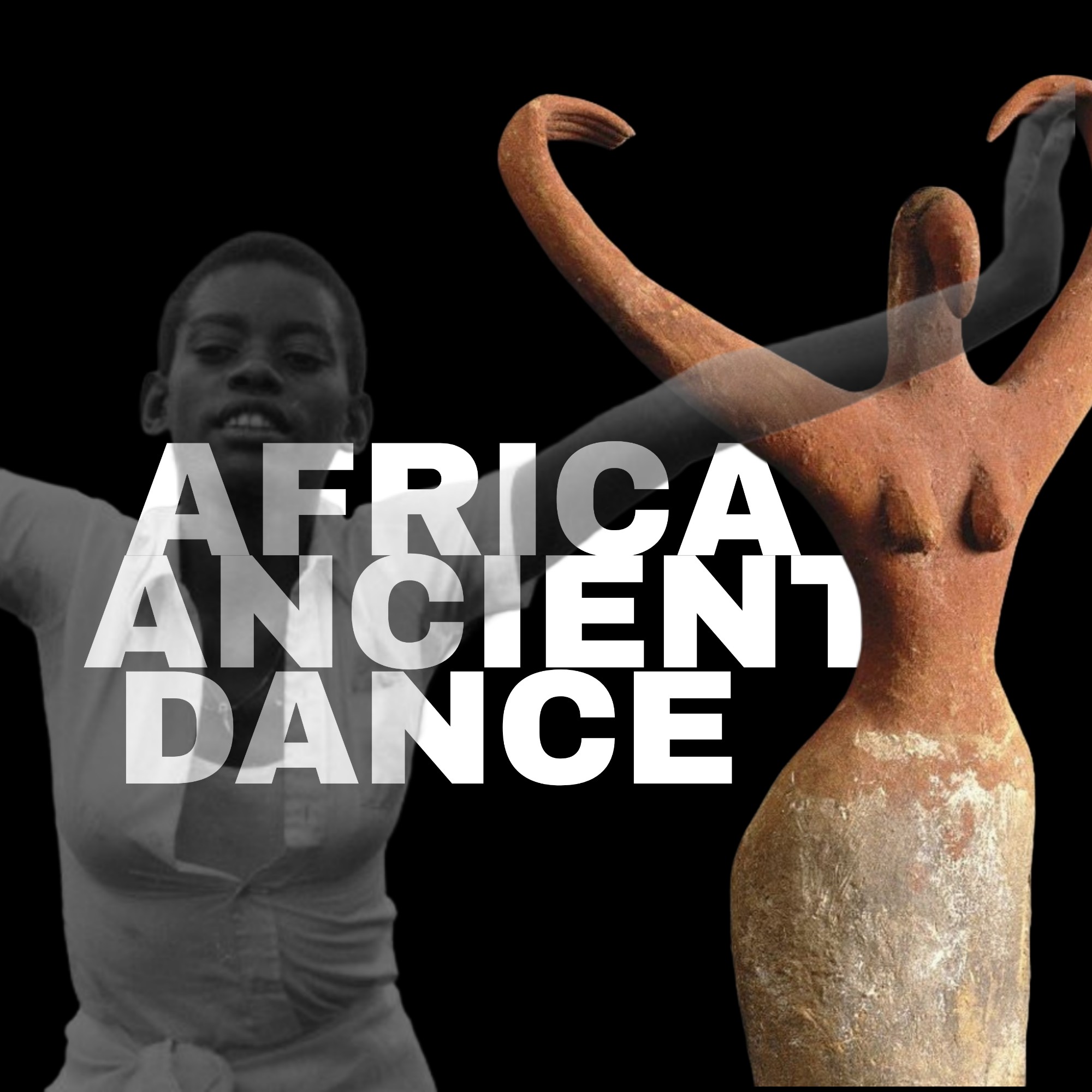
Dancers lift their arms above their heads, hands turned inward—almost exactly like the pose of the ancient Egyptian figurine in the Brooklyn Museum.
These dances are performed during weddings, ceremonies, and royal events, reinforcing the sacred status of the Ankole cow.
According to Dr. Jacques Nzabonimpa, an expert on Rwandan culture, these dances are deeply rooted in pastoral traditions. Similar dances exist among other East African groups, such as the Ikinimba of the Bakiga and the Umuhamirizo of the Banyamulenge, all celebrating the significance of cattle in their societies.
But could this dance, and the reverence for the Ankole cow, have an even older origin? Artefacts in ancient Egypt suggest that this dance could very well be the longest practise contemporary dance in the world, and the evidence is strong.
Ancient Egypt’s Connection to Ankole Cattle
The history of cattle reverence seemingly goes back much further. At least we have evidence to suggest it predates the birth of the world’s oldest known Ancient Civilisation, with clues leading us to the very dawn of the Kemetic civilisation, that is, the predynastic era of Ancient Egypt.
The Naqada Period (c. 4000–3000 BCE)
Also known as the ‘Predynastic Era’, was a time before the Pharaohs when Egyptian society was developing its first religious and cultural traditions.
Archaeological evidence from sites like Nabta Playa shows that long-horned cattle—identical to the Ankole-Watusi—were already domesticated and revered along the Nile Valley over 6,000 years ago.
The Gerzeh Palette and the Narmer Palette, some of Egypt’s oldest surviving artifacts, depict these very cattle, proving their significance in early Egyptian culture.
Cattle were more than just livestock in early Egypt—they were symbols of power, fertility, and the divine. The god Amen was often depicted as a bull, and Het-Heru (Hathor) was associated with sacred cows. The presence of Ankole cattle in early Egyptian art challenges the claim that pastoralism was imported into Africa—these cattle were indigenous to the continent, revered across regions, and deeply embedded in African spirituality. This brings us back to the Brooklyn Museum’s terracotta figurine.
The Female Figurine: A 6,000-Year-Old Dance?
Is this mysterious figurine, currently housed in the Brooklyn Museum, performing Africa’s most famous cattle veneration dance?
Captured in the early 20th Century – This image of teenage Rwandan females performing rhythmic ‘Amaraba’ to music. You will note the girls are have their entire upper body exposed, wearing only simple light coloured long skirts, exactly mirroring the female figurine of El Ma’marîya – perhaps giving us further insight into the significance of the ritual.The modest size of the breasts on the figure could indicate a ritual ‘coming of age’ dance, as seen in modern ‘Amaraba’ ceremonies.
In 1907, archaeologists uncovered a striking artefact in El Ma’marîya, Egypt—a small terracotta figurine of a woman in an unusual pose.
Her arms are raised above her head, curved slightly backwards.
Her hands are turned inward, her thumbs facing outward. This detail has been somewhat overlooked since the thumbs are now broken, but closer inspection indeed shows the broken stumps that were once the thumbs are found on the outside, thus proving the palms are turned upwards toward the sky.
Her legs are fused together, with a white-painted skirt.
Western scholars have debated the meaning of this pose for decades, speculating that it could represent a goddess, a priestess, or a ritualistic gesture. But the answer may be much simpler.
Is the mystery solved by looking toward Africa?
When compared to modern dancers performing Igishakamba and Amaraba, the similarity is undoubtable.
The curved posture of the raised arms has evidently been exaggerated by the artist to mimic the curvature of the Ankole Watusi cattle horns. It’s important to note that the nickname for Africa’s native breed of cattle is ‘the cattle of Kings’, because they are the same breed as the ones domesticated in Ancient Egypt.
The inward-turned hands with palms facing upwards, is the ultimate signature of this position. Fortunately, although the thumbs of the figurine have been broken, we can see from the position of the stumps, that the palms indeed face upwards in a peculiar fashion only known by Africa’s native cattle veneration dancers.
A Tradition That Has Survived for Millennia
Given the Igishakamba and Amaraba dances share a common ancestor to the versions apparently practised during the Naqada period, then this represents one of the longest standing contemporary cultural continuities in human history. This would mean that for over 6,000 years, African societies have honoured the same cattle, performed the same dances, and upheld the same traditions—despite the passage of time and impact of geography.



Leave a Reply