
1. Selection of Source Material


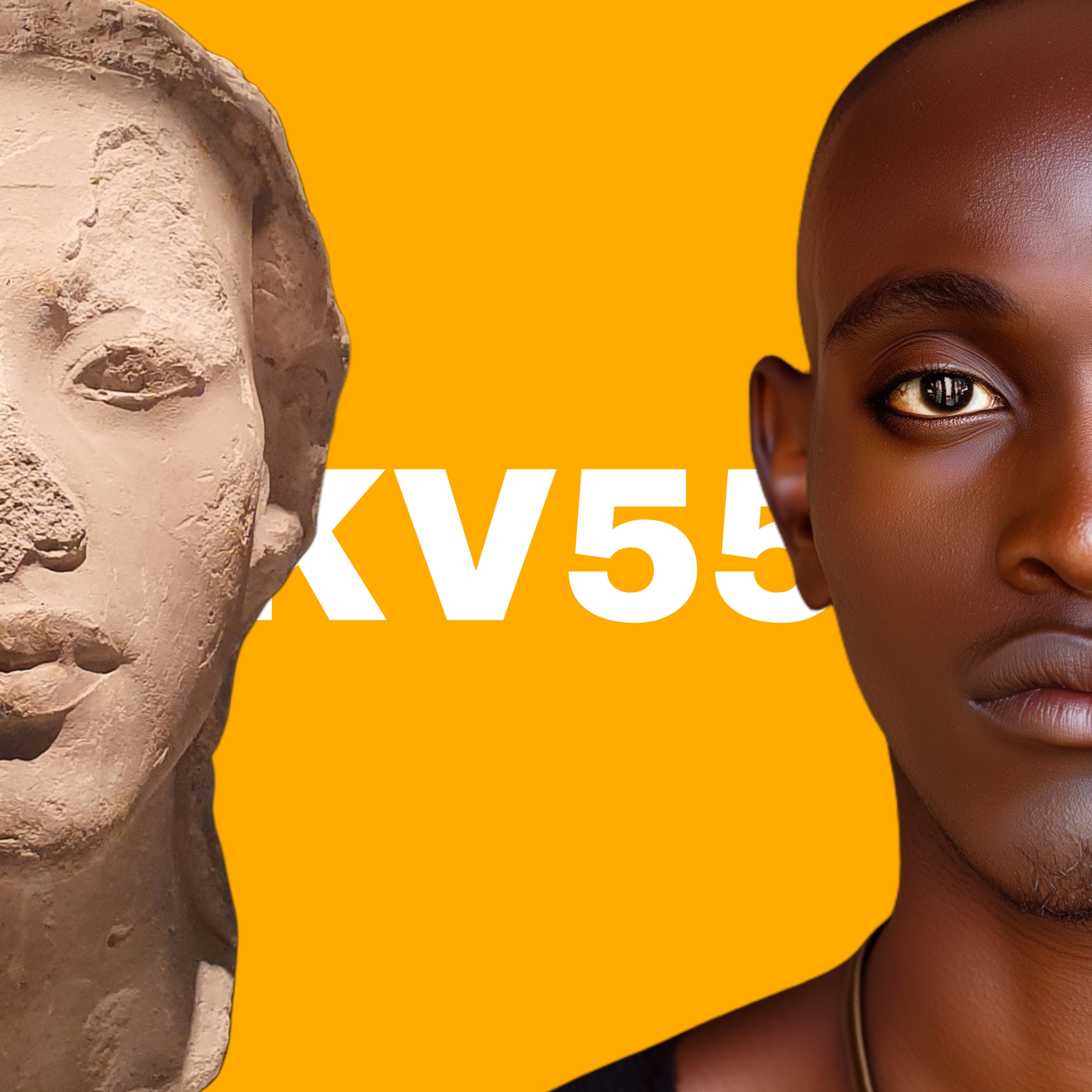
The reconstruction process began with an examination of various statues and portraits of Akhenaten, each offering distinct insights into his appearance. Unlike figures such as Queen Tiye or Tutankhamun—who have definitive surviving busts—Akhenaten’s depictions vary significantly in style, ranging from exaggerated artistic interpretations to more naturalistic representations. Initial attempts to base the reconstruction on stylised portraits resulted in an unrealistic appearance, falling into the “uncanny valley” effect. This prompted a shift towards more lifelike sources, particularly a highly detailed and naturalistic portrait that ultimately served as the foundation for the final reconstruction.
2. Restoration of Damaged Artefacts


Ahkenaten’s realistic portraits show very good consistency. Enabling easy restoration of primary source artefact using overlay technique
Many of the surviving artefacts depicting Akhenaten are fragmented or incomplete. A notable example includes a recovered fragment of his nose and lips, which provided critical details for shaping his facial features. This fragment was meticulously overlaid with other portraits to ensure anatomical accuracy. Additionally, a statuette showing Akhenaten alongside Nefertiti offered valuable clues about his later appearance, allowing for adjustments that accounted for the natural effects of ageing and parenthood on his physiognomy.
3. Phenotype Analysis
The analysis of Akhenaten’s phenotype drew from multiple artistic sources. His pronounced chin, consistently depicted across all surviving artefacts, was deliberately emphasised in the reconstruction. The nose proved more challenging due to conflicting representations, but this was resolved by cross-referencing the more naturalistic older portrait. The final reconstruction presents a blend of these features, resulting in a face that aligns with Nilotic and Horn of African phenotypic traits, reflecting the diversity of ancient African populations.


Ahkenaten’s subnasal prognathism, pointy yet broad-nosed at the base and thick lips but the lower lip being of greater thickness than the upper lip cumulate into a phenotypic profile abundantly seen in East Africa among nilotic populations.
4. Overlay Technique
To ensure accuracy, an overlay technique was employed, comparing the reconstruction with key artifacts. The naturalistic portrait of Akhenaten served as the primary reference, with facial structures carefully aligned. The recovered lip and nose fragment was also overlaid to refine finer details. This method helped reconcile discrepancies between stylized and realistic depictions, producing a cohesive and plausible representation.


5. Historical and Anthropological Context
Akhenaten’s reign remains shrouded in controversy, particularly regarding his introduction of monotheism and its potential influence on later Abrahamic religions. The reconstruction process considered parallels between Akhenaten’s hymns and passages in Psalms 104, which suggest possible cultural exchanges during this transformative period. Significant debate persists about his lineage—particularly whether Tutankhamun was his son or brother—highlighting the fragmented nature of surviving records from the Amarna period.
The reconstruction emphasises approaching these narratives critically, as modern understandings of ancient Kemet often filter through Eurocentric interpretations that have historically downplayed African connections. By anchoring the work in physical evidence while acknowledging these broader historical questions, the project bridges the gap between artistic reconstruction and anthropological inquiry.
This contextual understanding informed decisions about phenotype and presentation, ensuring the reconstruction respected both anatomical evidence and the cultural significance of Akhenaten’s rule during Egypt’s 18th Dynasty. The final representation consciously counters Eurocentric portrayals while remaining grounded in verifiable archaeological evidence.
6. Iterative Refinement


The reconstruction process was iterative, with adjustments made as new insights emerged. Early versions, influenced by stylised art, were discarded for appearing too artificial. Later iterations incorporated more realistic sources, blending features from different periods of Akhenaten’s life. The statuette depicting an older Akhenaten with Nefertiti informed the reconstruction of his younger appearance, ensuring a balanced and historically grounded result.
7. Final Presentation


The completed reconstruction presents Akhenaten as a melanated African with distinct Nilotic and Horn of African features, countering Eurocentric portrayals. While acknowledging the subjective nature of determining complexion, the reconstruction is supported by surviving depictions of Akhenaten’s parents and son. The final image underscores the importance of accurate representations in understanding ancient Kemet and its cultural legacy.

Leave a Reply