
1. Selection of Source Material


The reconstruction of Pharaoh Narmer relied on limited but significant sources. Two primary artefacts were used: the Narmer Palette and a miniature bust attributed to Narmer. The palette, depicting Narmer wearing the crowns of Upper and Lower Egypt, provided critical visual references. The bust, though small and lacking a cartouche, was considered a credible likeness due to its distinctive features. These sources formed the foundation for the reconstruction, despite the scarcity of portraiture from the era.
2. Restoration of Damaged Artifacts
The artefacts, particularly the bust, required careful interpretation due to their age and condition. The bust had no identifying inscriptions, raising questions about its authenticity. However, its unique physical traits aligned with depictions on the Narmer Palette, suggesting it was indeed a representation of Narmer. The palette itself, though well-preserved, demanded detailed analysis to decode its symbolic imagery, which included scenes of unification and conflict. No restoration of primary artefacts were needed.
3. Phenotype Analysis


A key focus was the analysis of Narmer’s physical characteristics. The bust and palette depictions showed a pronounced nasal bridge, a straight line from forehead to nose tip, and broad lips. These traits were compared to modern African ethnic groups, with notable similarities found among the Khoisan and Nguni peoples of Southern Africa. Genetic studies linking ancient Egyptians from the pre dynastic (particularly Kuene ancestry) to Southern African populations further supported this interpretation. The phenotype was distinct from other Kemetic artwork, suggesting Narmer’s unique lineage.
4. Overlay Technique


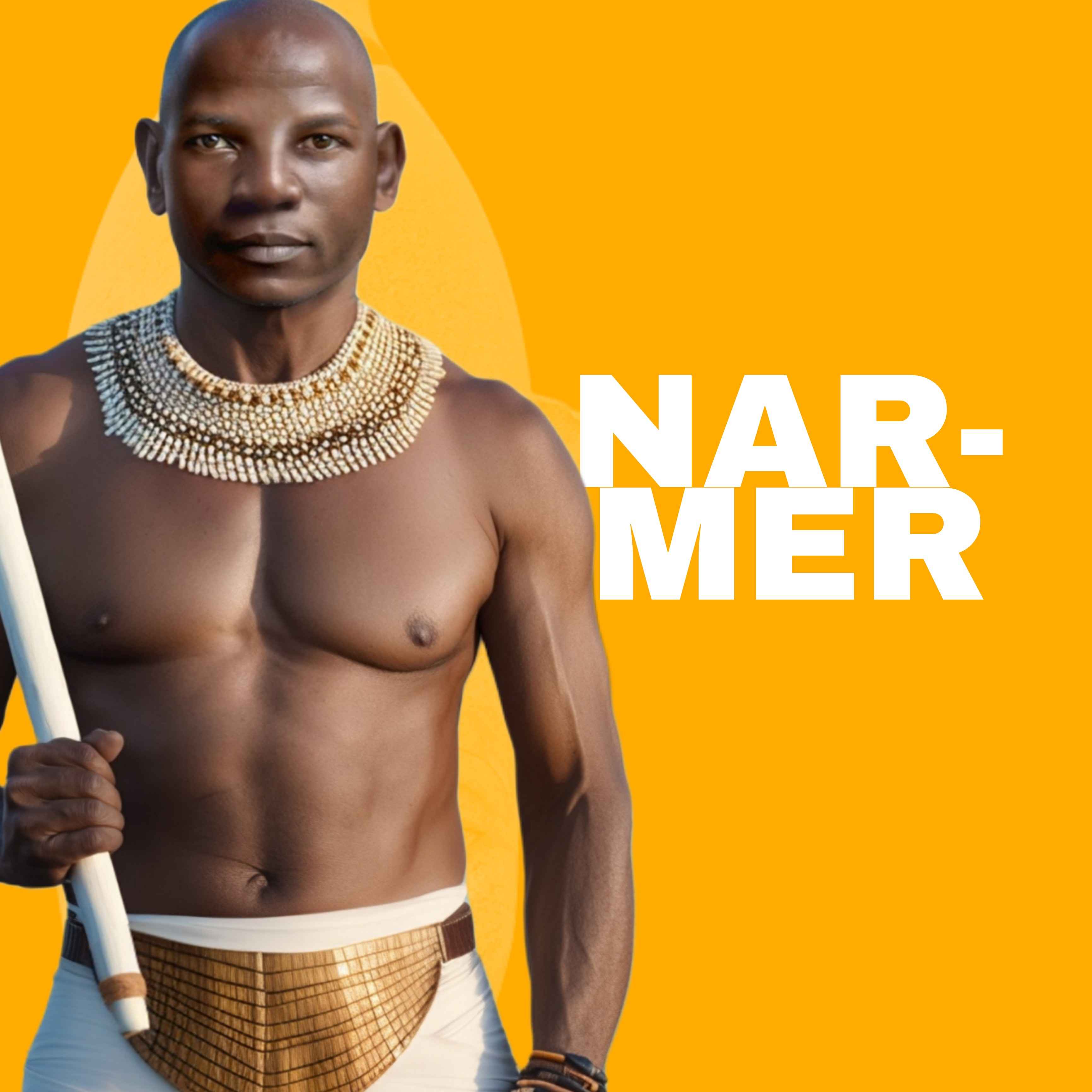
The reconstruction employed an overlay technique, combining the bust’s features with the palette’s depictions. This method ensured accuracy in facial structure, skin tone, and proportions. The result was a lifelike representation that honoured the original artefacts. The technique avoided exaggeration, adhering strictly to the available evidence to produce a credible likeness.
5. Historical and Anthropological Context
Narmer’s role as a unifier of Upper and Lower Egypt was central to the reconstruction. The palette’s imagery, interpreted as depicting internal conflict and unification, informed the portrayal of Narmer as a formidable ruler. The bull iconography on the palette symbolised strength and Taurean symbolism, reflecting the astrological beliefs of the time. Additionally, the reconstruction considered the cultural and ethnic diversity of ancient Kemet, emphasising its African roots.
6. Iterative Refinement


The reconstruction underwent multiple refinements to ensure fidelity to the source material. Adjustments were made to facial features, skin tone, and expression based on ongoing analysis of the artefacts and comparative studies of related populations. The goal was to balance artistic interpretation with anthropological accuracy, resulting in a depiction that felt both historically grounded and lifelike.
7. Final Presentation


The completed reconstruction presented Narmer as a warrior-king, with a stern expression and distinct Southern African features. The lighter skin tone, consistent with Khoisan phenotypes, and the pronounced nasal bridge were highlighted as defining traits. The portrayal aimed to challenge Eurocentric narratives while remaining faithful to the evidence. The final image conveyed Narmer’s role as a unifier, embodying the strength and determination of a ruler tasked with merging two lands.
The process underscored the importance of interdisciplinary collaboration, combining archaeology, anthropology, and art to bring an ancient figure to life. The reconstruction not only honoured Narmer’s legacy but also contributed to a broader understanding of ancient Egypt’s African heritage.


Leave a Reply to David BlackCancel reply