
Abstract
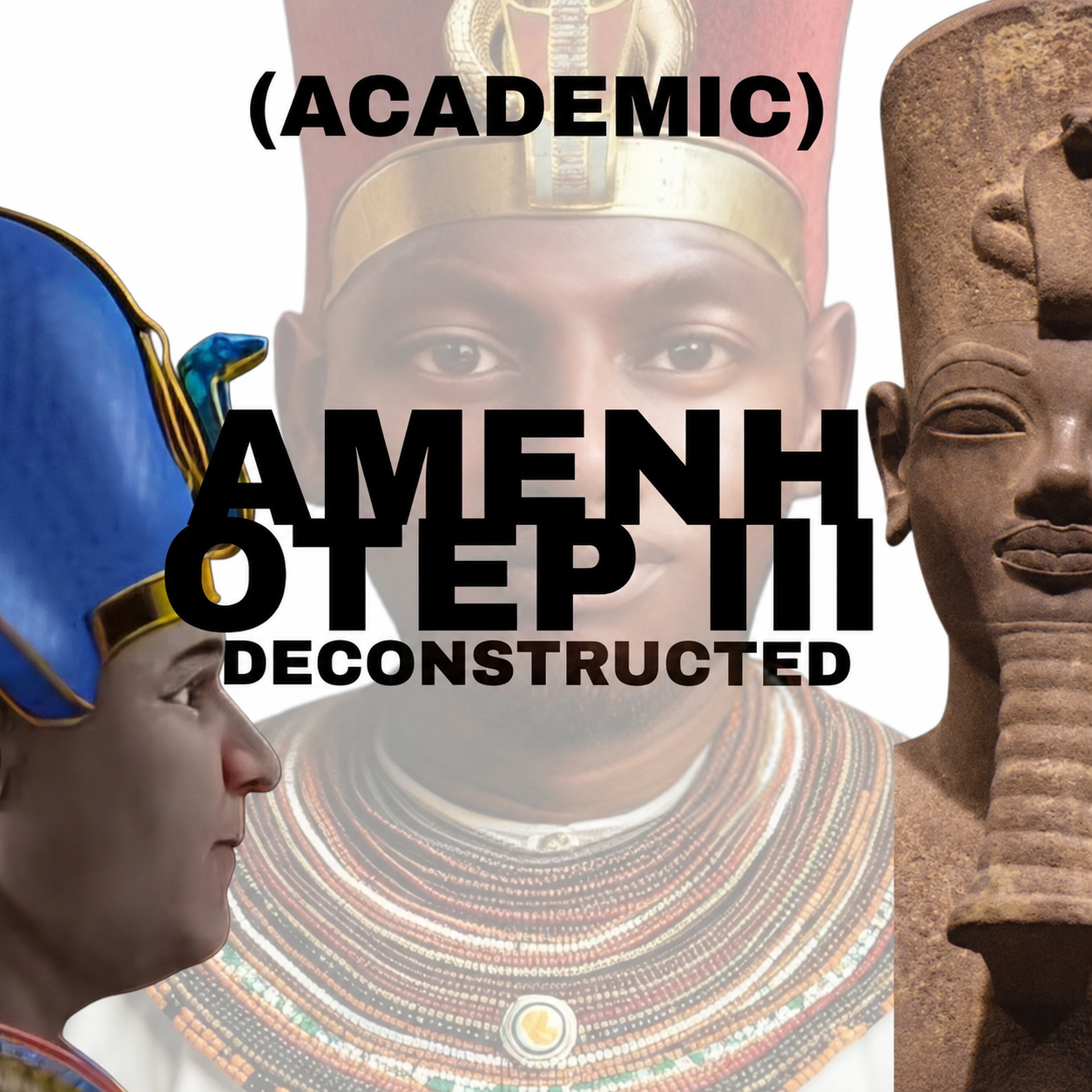
A recent forensic facial reconstruction of the Ancient Egyptian King Amenhotep III (reigned c. 1390–1353 BCE2) was recently produced by the Brazilian Graphic Designer and Reconstruction Artist Cicero Moraes. Moraes was working with Australian researcher Michael Habicht (who will from herein be referred to as ‘the multinational team’). The finished reconstruction has generated some controversy due to its visibly light skinned and phenotypically Eurasian appearance. This representation contradicts the numerous historical portraits, bas reliefs, papyrus artworks and statues which depict the king as a visibly dark-skinned individual with features commonly associated with native Africans. This paper critiques the reconstruction by addressing two primary issues: the overall omission of African ethnographic data in anthropological data gathering within Egyptology; and specific methodological inconsistencies by the multinational team during the reconstruction process that has resulted in a Eurocentric bias, and a poignant, but unjusti1able European appearance.
1 The Kings Monologue – BSc, PGCE (Brunel & UEL), UK
2 Britannica ‘Amenhotep III’ – https://www.britannica.com/biography/Amenhotep-III

Fig 1.0 – Cicero Moraes and team’s facial approximation of Amenhotep III (left) vs Collage of contemporaneous portraits of the said king (right)
Introduction
The portrayal of ancient Egyptian rulers, particularly in forensic facial reconstructions, has long been a subject of scholarly debate and public interest. Recently, a forensic facial reconstruction of Amenhotep III, produced by a multinational team of researchers from Australia and Brazil, has prompted some criticism for its portrayal of the king with an overtly Eurasian appearance. This representation stands in stark contrast to numerous historical depictions, such as portraits, bas reliefs, and statues, which consistently depict Amenhotep III as a visibly African individual of East/Northeast African stock. These inconsistencies highlight significant issues with the methodologies employed in forensic facial reconstruction as a whole, and the broader anthropological approaches in Egyptology.
Although this part of the study will be specifically critiquing the approach and results of the multinational team, it should be stated that the same critique could be applied to any number of modern reconstruction teams. Dr. Michael Habicht and Cicero Moraes are both deservedly well respected in their fields. Mr Moraes and myself have formed a professional working relationship
and assisted one another throughout this process. He has shown courage in defending his work, for example, when he was recently targeted by the Egyptian Antiquities Ministry in a typically aggressive manner. He showed braveness to defend his decision not to conform to their anti-black rhetoric directed against his reconstruction of Nazlet Khater. In many ways, it must be stated that my critique of their reconstruction is acting as a conduit to a wider, more far reaching issue associated with bias, nationalism, politics and the racially volatile foundations of the entire field of Egyptology, which ultimately causes professionals involved in the fields to act (knowingly or unknowingly) outside of their usual protocols and make professional compromises that result in the perpetuation of Eurocentrics tropes, and fabricated truths.
Shortcomings in Anthropology contributing to bias
In the discipline of anthropology in academia, the general omission of systematic data gathering from African populations manifests itself in several ways:
- The incorrect assumption that Africans exhibit a single or narrow subset of phenotypes (sometimes referred to as the ‘True negro’ trope) (Shamambo, 2022)3 (NYJOC 18G0) comes from a limited idea of race propagated by Seligman. Seligman posited that the ‘True Negro’ was to be found Southwest of the Sahara, and that all the people found North and East of this ‘line drawn from the mouth of the Senegal River through to Khartoum’ falls under the classification of being a part of the ‘Hamite or Semite’ race therefore is ‘essentially white or light skinned’ (Seligman 1966 pg. 30). The international team failed to reference any investigation or data gathering on the African continent, even within the target population of their reconstruction.
- There is also the dismissal of Egyptian artwork as symbolic rather than accurate (Moraes 2024) when it depicts African features. Mr Moraes stated that Egyptian portraiture were ‘works of art, in addition to not being based on the skull…’
- The misinterpretation and subsequent misrepresentation of mummified soft tissue as resembling individuals in their living state, without considering the effects of mummification on physical features (Moraes 2024). Mr Moraes falsely asserted that the ‘nose of the mummy does not follow the shape of the statues’ without considering the mummification or natural aging process, and its effect on the physical phenotype of individuals;
- the refusal to acknowledge the existence of contemporary African populations that phenotypically and genetically match ancient Egyptian anatomies in respect of complexion, anthropometrics, and genetic assessment of the individual in question (Amenhotep III) or people who can be faithfully associated as being ethnically analogous to him. (Robins 1983, Gourdine 2018, Mekota 2005)
- Finally, the erroneous classification of traits shared between Europeans and Africans as Caucasoid (or ‘Nordic’) (Dart 1938) as opposed to ‘African’ features in origin – results in researchers like Mr Moraes and team to unfortunately misclassify perfectly normal expression of African phenotypic diversity, as being the result of admixture, or more often, foreign ‘Caucasoid’ origin. Sadly, many of these outdated beliefs have persisted in the practices attached to Egyptology, a legacy of racism inherited from the early years of the discipline (Keita 2023).
3 Rethinking the Use of “Caucasian” in Clinical Language and Curricula: a Trainee’s Call to Action
Luwi J. Shamambo, 2022 – The author highlights the problematic application of Caucasian to native Africans who exhibit physical features that are not entirely opposite to stereotypical Europeans.
Addressing the Methodological Flaws
Methodological flaws identified in the multinational team’s reconstruction process include:
- A reliance on third-party images of the skull gathered from available 2D imagery, ultrasound and CT scans, (which is used to formulate a detailed 3D representation of the individual, Moraes 2021). This 3D reconstruction of the skull, in the case of the reconstruction of Amenhotep III was treated as the absolute authority for the likeness of the subject, without incorporating the available anthropological data;
- An apparent lack of expertise in African phenotypes and omission of African ethnographic and phenotypic data lead to a Eurocentric bias (Moraes 2022). This bias is evident in the selective use of artwork and anthropological data;
- The inaccurate digital reconstruction of the skull increased the likelihood of errors and bias in the outcomes of the reconstruction;
- The selective inclusion of the unjustified exaggeration of Amenhotep III’s obesity which is not based on sound anthropological research. The inclusion of this ‘detail’ contradicts Mr
Moraes’ claim that the historical anthropology did not impact his reconstruction process;
- the attribution of pale skin is entirely unsupported by any historical evidence, and therefore a choice. Mr Moraes failed to address this criticism even in his paper addressing the controversy, only stating that his reconstruction was ‘not white’ and that he avoided bias by using an ‘objective grayscale’ – both claims of which I will be refuting in this paper.
- Finally, the overemphasis of allegedly ‘scientific’ processes used by Mr Moraes attempt to elevate the approximated facial estimates produced by Mr Moraes and team, over the countless contemporaneous historical portraits. This, in my view is a disingenuous claim that exploits public ignorance of the substantial limitations of facial approximation, particularly in the absence of supporting anthropological data;
This study calls for better scrutiny and inclusion of all anthropological data, including diverse African anthropological data and the involvement of indigenous African and diaspora African researchers in future reconstructions to ensure accurate and respectful representations are produced. We also advise an elevation of the status of the skillfully crafted Egyptian portraiture, so that where it is available, it should be held in equal regard to classical, and even modern era portraiture, not just discarded as ‘standardized/stylized’ artwork.
African phenotypic diversity (an ignored phenomena)
The omission of African reference data in Egyptological research is a major factor contributing to skewed results in numerous studies. Prevailing misconceptions include the belief that Africans only exhibit a single homogeneous (or very few) phenotypes, whilst Eurasians are seemingly approached as an almost infinitely diverse group (Farkas 2005)4. Furthermore, there is a persistent refusal to acknowledge contemporary African populations that are anthropomorphically and genetically aligned with ancient Egyptians (Robins 1983, Gourdine 2018, Mekota 2005)5. This is typified by the tendency to erroneously classify any shared traits that exist between Europeans and Africans as ‘Caucasoid'(or, at very least, evidence of some kind of recent European admixture)G. Shared traits, such as straight narrow noses, wavy hair, or lighter skin are never considered to be native African features (or expressions of indigenous African variety). The recurring theme being that even though it is acknowledged that mankind, although spending a majority of there existence as modern man on the African continent, only suddenly began to develop diverse phenotype and genotype upon migration from the African continent (Keita 1997)7. Africa is regarded, for some reason, as incapable of its own indigenous diversity.
A summary of criticisms and outcomes
The methodological approach of the multinational team further exacerbates these issues. Their reliance on constructing a skull of Amenhotep III solely using third-party images to construct a 3D reconstruction, without integrating the available anthropological data, highlights a significant gap in their research process. The team, although consisting of highly skilled individuals with a track record for employing notable and novel techniques in the field of Facial Approximation.
4 Farkas 2005 – Study titled ‘International Anthropometric Study of Facial Morphology in Various Ethnic Groups/Races’ sampled 17 populations classified as Eurasian, but only 3 African and 1 African diaspora population)
5 Robins 1983 identifies ‘Negroid’ limb proportions for the pharaonic lineages. Gourdine 2018 identifies a positive match affiliation with ‘Sub Saharan African’ populations (in accordance to the POPaffiliator analysis of STR data. Mekota 2005 identified Theban nobles possessed skin with ‘Negroid’ characteristics.
6 During the 2005 reconstruction of Tutankhamen commissioned by Zahi Hawass, King Tut’s ‘narrow nasal opening’ was ‘considered a caucasoid trait’ – National Geographic, 2005
7 Keita and Kittlrs 2005 ‘The Persistence of Racial Thinking and the Myth of Racial Divergence’ – States: “Racial thinking is especially prevalent in studies of Africa. It persists in defiance of genetic data that deconstruct such thinking, probably as a result of the socio-cultural milieu, linger research traditions, and a lack of appreciation of the implications of modem genetic studies.”
[[EXPAND]] (Baldasso 2020) and historical research (Habicht xxx), clearly exhibit a lack of exposure to African phenotypic diversity (Moraes 2022), and this is exhibited in, perhaps unintentional, Eurocentric biases, such as: the selective, and inconsistent use of historical artwork and anthropological data; the incorrect orientation and reconstruction of the skull of Amenhotep III (Manners 2024); and the unjustified selection of pale skin for the subject (Moraes 2024), (a choice in total contradiction to actual depictions of the ancient monarch) [see fig 1.1]. These methodological flaws not only distort the historical accuracy of the reconstruction but also undermine the scientific credibility of the process.

Fig 1.1 – Collage illustrating how multiple depictions of Amenhotep III appear to track the same individual through his life with minor adjustments made to compensate for fluctuations in age and weight.
This paper aims to critique the multinational team’s recent forensic facial reconstruction (or facial approximation) of Amenhotep III by addressing these critical issues. By presenting comprehensive anthropometric, craniometric, genetic, cultural, and artistic evidence, we will present a more anthropologically likely representation of the king’s appearance that combines the 2D forensic projections with the available historical and anthropological data [see Fig 1.2]. Furthermore, we advocate for the inclusion of diverse African anthropological datasets and the participation of indigenous African and diaspora African researchers in future reconstruction efforts. Such
inclusion is essential for ensuring that the rich phenotypic diversity of African populations is respected and accurately portrayed in future scientific reconstructions.

Fig 1.2 – Composite image of side by side comparison of: Left – Habicht and Moraes (multinational team) profile view of rebuilt skull and overlay. Lower left: full reconstruction (Habicht 2024). Right – Author 2D skull rebuild and overlay of profile view. Lower right: full reconstruction (Andrew A, King 2024).
Secondary Review & Discussion
Introduction to Forensic Facial Reconstruction
Whereas it is beyond the scope of this paper to undertake a detailed critique of the entire field of Forensic facial reconstruction8, it is important to establish the main contributing issues leading to the current limits in the capabilities of the practice to provide context to the critique of this particular reconstruction of Amenhotep III, which in itself will provide a lens to focus on broader issues that affect the field (FFR). A broader examination of the entire field of forensic facial reconstruction will be undertaken in a subsequent study.
8 Facial reconstruction is employed in the context of forensic investigation and for creating three-dimensional portraits of people from the past, from ancient Egyptian mummies and bog bodies to digital animations of J. S. Bach. – C. Wilkinson 2010.
Forensic facial reconstruction is a technique used to recreate the facial features of individuals from their skeletal remains, primarily isolated to the skull (Baldasso 2020, Wilkinson 2010). This method is often employed in both forensic science, but increasingly is finding relevance for its application in historical anthropology, providing visual representations of long deceased monarchs and the nobility of yesteryear (Wilkinson 2010). Importantly, the techniques vary greatly, particularly with the advent of modern digital workflows, such as those employed by Mr Moraes and team (Baldasso 2020, Moraes 2014, 2021), but they typically involve detailed anatomical knowledge and, increasingly the utilization of databases of sample populations in order to replicate trends and assess the efficacy of a reconstruction process (Wilkinson 2010). Regardless of whether manual construction methods or a hybrid digital methodology is employed, (such as the Moraes method that utilizes a database of CT and ultrasound scans to form a digital exemplar) (Moraes 2014, Moraes 2022), the manipulation of a vast database of contributing samples is required to formulate averages around the expression of tissue data. This can be exercised in a layering form (Russian method), using tissue data pin points on key areas of the skull (Manchester method), or by the production of a ‘donor’ (exemplar) model which is then conformed to the skull using algorithms that provide statistical analysis regarding average distances according to proportions and projections, once again based on formulas that are based on a database of averages (Moraes 2014). However, the reliability and objectivity of the resulting reconstructions has been the subject of ongoing debate, particularly when it comes to historical figures where ethnic and racial identities are sensitive and contentious (Wilkinson 2023)9. It is less cited, but equally the perspective amongst the general public that influencing the ethnic perception of ancient civilizations can often be the driving factor for the commissioning of these reconstruction projects, especially in the case of those sanctioned by the Egyptian Antiquity (Hawass 2005) who have a publicized history of belligerence towards researchers that dare to suggest a link between the
ancient civilization and the native black population of Africa (TNAS 2023, Boztas 2023)10. This racist gatekeeping in Egyptology is well known, highly publicised, but seldom challenged. It is important to state at this point that there is no evidence to suggest that the multinational teams approximation has been driven by financial incentives. To the contrary Mr Moraes has expressed in private discourse that all his work done thus far has been voluntary.
9 Wilkinson (2023) states: “there has been a good deal of controversy around the
facial depiction of ancient Egyptians, which primarily stems from a lack of
definitive evidence and historical record describing their physical characteristics.”
Previous Reconstructions of Ancient Egyptian Figures
The portrayal of ancient Egyptian figures through forensic facial reconstruction remains controversial, but has been ceaselessly pursued by historians, anthropologists and other interested parties (Wilkinson 2010). Sanctioned reconstructions have often been criticized for their lack of objectivity, with questions surrounding eurocentrism and racial bias. This can be coupled with the known tendency to project present values of race and national identity onto an ancient people whose perspectives were not binary so our own in present day (Crawford 2021), and had no knowledge of race as a social construct. The tendency to illustrate Ancient Egyptians as a Eurasian leaning population has its root in centuries of anti-African sentiment and outdated racial distinctions that have been present since inception of Egyptology (Keita 1997), forcing early Egyptologists to decide where in the rigid racial schema (Mongoloid vs. Caucasoid vs Negroid) this ancient society belonged. These same notions of race can be seen today in the field of reconstruction, where, in spite of substantial anthropological data suggesting otherwise, Eurasian phenotypes continue to be applied, as default, by the various teams carrying out approximations. These decisions regarding race and phenotype are not being driven by anthropology.
1 In recent years, the ‘Egyptian Antiquity’ has become increasingly harsh towards any exploits by archaeological teams and anthropologists linking the Ancient Egyptian civilization to the wider African population. This has been demonstrated by bans against archaeological teams and even lawsuits against Media outlets. – All focused against Ancient Egyptians being ‘black’.
Double standards in the treatment of Egyptian portraiture
Ironically, Amenhotep III, prior to this recent attempt by the multinational team, is seldom approached as a subject for forensic facial reconstruction attempts. It is possible that in spite of him being a significant New Kingdom monarch, his portraiture is so overtly African that apart from a handful attempts, he is, for the most part, considered to possess an overtly African phenotype. Or, among the fraternity of non-commissioned reconstruction artists (like myself) there is at least the consensus that he is presented most commonly as a continental African man, even by Eurocentric artists.
Brunton’s Depiction of Amenhotep III
Ironically, there is a famous attempt to depict him by 19th Century Artist and Egyptologist, South African Winifred Brunton, who was renowned for her ‘talent’ of transforming Egyptian monarchs into vaguely hellenic dressing, aryan looking, indo-Europeans. She is largely regarded as ‘the 1st person to consider the living appearance of the kings and queens of Egypt through portraiture in the 1920s.’ (Wilkinson 2023)

Fig 1.3 – Winifred Brunton was at least consistent and transparent in her belief regarding the ethnic stock of the Ancient Egyptians, but had a clear aversion to directly referencing the artwork beyond observation of the attire. She also was not influenced by the ‘forensic’ evidence. (Brunton 1926 & 1929).
She, in consistent form, depicted Amenhotep III as a clinically obese, very white, caucasian male. Ironically, in many ways, it was nearly identical to the one approximated by Moraes and team. However, she did so without the aid of ‘forensic’ processes, or any comparison to the skull. Ms Brunton’s artworks have openly been described as ‘enhanced illustrations of the existing statues’ and in spite of being a keen egyptologist who studied many mummies, it is agreed that she had ‘scant evidence’ to base her paintings upon, employing none of the methodology utilized by modern reconstruction artists. Indeed, she did not adhere closely to the ‘physical evidence’11. In this case, how was she able to approximate this same face that they obtained ‘from the skull’, which also completely overwrites the artistic impressions and portraiture, yet without a forensic approach? Perhaps she was a psychic? Or perhaps it doesn’t take a forensic reconstruction artist to achieve the goal of europeanising a subject once the decision is made to ignore the subject’s very African artwork. Seemingly, any outcome can be achieved with a blank canvas approach.

Fig 1.4 – Brunton vs Moraes – The same outcome, equally divergent from the anthropological data. One used the skull, one did not, yet both ignored the anthropological data and ironically achieved the same outcome. Both approximated an overweight, pale skinned Eurasian male, in total contrast to the anthropological data pointing towards a native dark skinned African man.
Elisabeth Daynes
Famous Paleo-artist Elisabeth Daynes who is renowned for her work in the field of archaeological Forensic Facial Reconstruction did not reference any of Tutankhamen’s hundreds of consistent portraits for her facial reconstruction, both the commissioners and artist seemingly agreeing that the busts were of no value in the reconstruction of the King (Nat Geo, 2005). Yet, conversely when the same artist created a facial reconstruction based on the remains of KV35 YL as Nefertiti (a work that is held in regard by the multinational team), every effort was made to reference the single (and controversial12) Berlin Bust. The reconstruction team, headed by Dayne’s painstakingly sought to match its likeness as much as craniometrically possible (AO 2018) (which wasn’t very much since they were entirely incompatible). In short, the skull had substantial zygomatic projection, a rounded forehead, pronounced dolichocephaly, an extended alveolar and strong prognathism, all of which are typical of Nilotic Africans, and all of which were not present or devoid on the Berlin bust. This raises the questions as to why the Berlin Bust was regarded as a reliable depiction over her several alternative (and more phenotypically consistent) busts and reliefs, and why the Berlin Bust was suitable as an anthropological aid in the reconstruction process in this case, yet none of the hundreds of busts of Tutankhamen were suitable as an aid in his reconstruction when the same reconstruction artist undertook that work under a similar commissioning body?
11https://www.touregypt.net/featurestories/winiferbrunton.htm

Fig 1.5 – . Left: KV35YL Modelled after Nefertiti by Elisabeth Daynes, 2018 – all features and the skin tone were best replicated onto the skull which has pronounced African facial proportions resulting in total incompatibility. Right: When the same reconstruction artist developed this reconstruction of King Tut, none of the features or skin tone of any of his artworks were used.
Could the reason be that the busts of Tutankhamun which unanimously portray his full lips, round tipped nose, deep brown skin and full face, all consistently fall in line with the surrounding native African population, but the Berlin bust is objectively more Eurasian in appearance and therefore, accepted?
12The Berlin Bust exhibits unique traits (such as the use of stucco plaster to finish limestone) The transcripts and records that typically accompany excavated goods are either forged or missing All of this brings into question its authenticity. There are several other busts of Nefertiti that are largely ignored by Egyptologists for some reason.
Reconstructions of Tutankhamen through the ages
On the subject of King Tutankhamen, there have been a plethora of ‘forensic’ reconstruction attempts, some of which I have depicted for brevity [Fig 1.G]. Approximately 8 have been published – (Wilkinson 2023) , and together they illustrate the substantial divergence in the interpretation of the king’s features. Interestingly, all of these reconstructions have been presented to the public as ‘forensic’ approaches, and all teams responsible have been equally dismissive in the valuation of his portraiture as a contributor towards the estimation of his visage, suggesting the skull provides all of the data required for an accurate reconstruction. However, it is clear after numerous attempts that we are no closer to achieving ‘forensic’ consensus; they have all interpreted the same data, entirely differently. This debunks the claim that the process is capable of producing an objective, consistent outcome. Surely, each reconstruction team would have benefited from finding a way to utilize the portraits, even as a rudimentary guide. This, above all else, would have at very least produced a more consistent result, centered around reliable source material (that is, unless his true face wasn’t the result they were actually after).

Fig 1.6 – From top left to Bottom right: Selim 2014, GatliI 1983, Corbet 2022, Moraes 2023, Lunau 2016, Daynes 2005 – ‘Forensic’ facial reconstructions all present different approximations of how Tuts features should be interpreted. In the case of the Moraes et al attempt, the head shape has changed considerably. All artists would argue foremost science has objective outcomes yet we have divergent nose and mouth widths, shapes and projections. Only the position of the eyes and the unsupported certainty that he was of middle eastern, as opposed to native African racial stock- the latter consensus being reached with no supporting anthropological reasoning in any of the reconstructions.
Caroline Wilkinson
Renowned historical reconstruction artist, Anthropologist and head of Facelab, Caroline Wilkinson in her reconstruction of Ramses II, continued the Egyptological trope of totally ignoring the multiple and consistent statues of Ramses II, many of which depict an identical face, and all exhibiting traits unique and consistent to the king. The irony being she was happy to selectively consider aspects of anthropology and the artwork she felt confident to produce the outcome that would, in her own words, stimulate a sense of ‘national pride… depictions of the pharaohs can be important tools in this effort’, this is a worrying sentiment to express in a field of objective study, where the outcomes should be determined by the process and not the agenda. She noted the prominent use of ‘reddish brown’ skin tone in Egyptian art, and went on to produce a notably beige (non-reddish brown) colour approximation. She painstakingly identified the differences between Nubians and Egyptians, oddly mentioning the claim Nubians are depicted with curly hair, yet, Egyptians are the only ones ever depicted with perfect afros, one can observe the Narmer Palette [Appendix 8] for evidence of Egyptian
curly afros contrasting with the straight hair of the invading class. No such distinction is made between Egyptians and Nubians. She even cited genetic ‘evidence’ from the Schuenemann 2017 study in support of her ‘racial’ choices, seemingly unaware of the multiple shortcomings of this, notwithstanding its very limited sampling of foreignly held tombs which were used in time periods outside of dynastic era of Egypt. In short, the entire exercise seemed to apply only the aspects of anthropology that would suit the outcome of producing a reconstruction that would ‘stimulate national pride’, and by national, we mean those in a position of political influence, as opposed to those actual reddish brown Egyptian nationals in Aswan, or the South of Egypt. The study will prove in some detail, that Ramses, who has several striking bas reliefs and statues showing a prominent and recognizable profile has enough supporting anthropological evidence to have been able to produce a much more honest approximation.
Ms Wilkinson who utilizes the Manchester method for her reconstructions, oddly opted against utilizing the detailed and numerous portraits of Ramses II. The decision to ignore these is questionable since it’s the same artist who has stated regarding her process “The greatest accuracy is possible when information is available from preserved soft tissue, from a portrait, or from a pathological condition or healed injury.” (Wilkinson 2010). Here, Ms Wilkinson clearly states how important the physical, contemporary portrayals of individuals are to the positive outcomes of a forensic reconstruction.

Fig 1.8 – Dozens of Ramses II very consistent busts were deemed to be unhelpful in approximating his face during this recent forensic facial reconstruction.
However, on this occasion, she opted instead to again conduct an isolated reconstruction based on just the anatomy of the skull, and the selected tropes regarding skin tone, which she subsequently ignored. This is
surprising since when the same reconstruction artist conducted reconstructions of composer JS Bach and English monarch King Richard III (Wilkinson 2023), single portraits were not only sufficient, but were referenced significantly in the selection of complexion and features; in the case of the latter, the portrait (that was not even contemporaneous to his life but produced around 75 years after his death), still influenced the reconstruction artist and team to try their very best to match its appearance, fully adhering to match its appearance, irrespective of how incompatible the skull was with the clearly phenotypically divergent features of the painting. It’s amazing that even in the case where it is known that the artwork was not a portrait but representative, it was still given primacy, yet the artworks that we know were contemporaneous (Ramses II) were regarded as useless. It is rather telling that in her 2023 paper (Wilkinson 2023), the reconstruction artist states as the opening highlight “Depicting the face of such an important ancient Egyptian Pharaoh stimulates national pride and cultural knowledge transfer.” Why would revealing the face ‘stimulate national pride’, if the exercise had not been undertaken to resemble the modern population, or at least the part of the population regarded as symbolically representing the nation? This kind of opening agenda is revealing and troubling.

Fig 1.9 – In the reconstructions of Richard III (left) and JS Bach (right), the portraits were held in such high regard that in both cases visible orthognathism and slight jawlines in the portraits were exchanged for a visibly broad jawline and substantial mandibular prognathism. The noses also protruded more and the teeth did not align with the mouth. The mouth was artificially moved up to reduce the large maxillary. However, the portraits continued to be adhered to with reverence throughout the process in spite of these glaring incompatibilities that should cause one to question the authenticity of either the remains, or the portraiture itself.
Indeed, the trend in the case of forensic facial reconstructions is clear. Historic artwork and portraiture is valuable, but not when the artwork is of an overtly African phenotype. The rules of when and when not to utilize supporting artwork is not even consistent treatment within the narrow field of Egyptology. We know this since when the portrait exhibits traits which could be considered ‘caucasoid’ (such as the aryan adored bust of Nefertiti), the trope regarding Egyptian artwork being ‘incompatible and standardized’, as opposed to accurate portraiture is suddenly discarded, and the art inexplicably reverts to being realistic and reliable portraiture once again. An interesting double standard indeed.
Anthropological Data on Amenhotep III that contributes to estimating his ethnicity
Anthropological data, including anthropometric data, genetic studies, and cultural artifacts, provide crucial insights into the appearance and possible ethnicity of ancient Egyptians. There is substantial evidence to suggest that ancient Egyptians exhibited a diverse range of phenotypes native to the Nile Valley region, and in support of the historical legacy, eye witness accounts and all literature and art predating the 18th century, these phenotypes were typically African.
1. Anthropometric Evidence:
Studies have shown that the anthropometric proportions of ancient Egyptians of New Kingdom pharaonic lineage are entirely consistent with the bodies of modern central African populations. In numerous studies conducted on ancient Egyptian mummies both male and female extending across the Pharaonic Lineage of the New Kingdom, the limb proportions were processed through formulae calculated to navigate the distinct differences observed in distal segments when compared with proximal segments for ‘black’ subjects in comparison to ‘white’ subjects (Robins 1983, Robins 1986). The initial reaction to these kinds of studies will raise questions of ethics regarding race because of the eery association with phrenology. However, there are distinct differences between the tropically evolved populations of Africa, versus the cold adapted populations of Eurasia (Hawks 2021). These differences aren’t reflected as consistently in facial features and complexion (features to which we normally esteem great value to). Africans exhibit comparatively much longer distal segments in comparison to proximal segments (Robins 1986), and proportionately shorter torsos and broader shoulders. So distinct is this difference, it can be observed in sport where the East African distance runners are known for their long narrow limbs; additionally, in boxing, it is almost a trope that fighters of African descent will be afforded a reach advantage over non African fighters when they are of comparative height. Importantly, the ancient Egyptians consistently cluster with tropically evolved Africans, with researchers able to effectively calculate their limb lengths using ‘negro equations’ (Robins 1983), these limb proportions have otherwise been described as ‘super negroid’ by researchers and these proportional differences are consistent across male and female subjects (Robins 1986). It is important to note that Amenhotep III was among the pharaohs sampled by Robins in his 1983 study titled ‘The Physical Proportions and Living Stature of New Kingdom Pharaohs’. The body plan of Amenhotep III fell perfectly in line with the negro equation, corresponding with Tibio-femoral ratio that equated substantially amongst black African limb proportions. [Fig 2.0]

Fig 2.1 – Credit to Robins 1986 Chart from ‘The Physical Proportions and Living Stature of New Kingdom Pharaohs’ showing the tibio-femoral indices for Pharaonic lineages in comparison to Negro and White proportions. NB: It must be stated, as is typical of the field of Egyptology, the author refused to attribute the consistent clustering of ancient Egyptians as close to ‘black’ people as proof of anything other than elongated members of the caucasoid race. Thankfully, we have progressed since and these nonsensical conclusions are largely unsupported.
These studies effectively proved that irrespective of any other data we might be confronted with, Amenhotep III (along with several other New Kingdom Pharaohs) had the body of a native African. On a physiognomic perspective, he would not look out of place among the long limbed Massai, Tutsi or Nilotes of the Nile Valley. These body plans are really very much a signature of African populations and in stark contrast to modern Near Eastern and Eurasian populations sporting shorter distal segments in comparison to the proximal. Amenhotep III Tibia/Femoral ratio falling central on the ‘Black/Negroid’ line of best fit signifies researchers were able to perfectly calculate his height and the length of any of his bones using a single bone, quite conclusively and with very little error. That study states: “It is shown that the limbs of the pharaohs, like those of other Ancient Egyptians, had negroid characteristics, in that the distal segments were relatively long in comparison with the proximal segments.” (Robins 1983)
Another study was conducted to ascertain the best method of rehydrating mummified soft tissues conducted melanin density observations as part of the research process (Mekota 2005). The authors discovered that the skin of the mummies had melanin concentration that fell in line with ‘negroid’ populations, suggesting that the ancient Egyptians in this study were dark skinned (deeply melanated) Africans (or negroids). As informative as this revelation was, what makes this research particularly relevant to this paper is that the 297 mummies that were sampled for the research were from Thebes, the very district that the illustrious 18th dynasty monarchy hailed from. Given that these ‘negroid’ mummies were also nobles, far from being unidentified persons. (like in future studies that have been given so much unwarranted credence (Scheunemann 2017)), this study gives us one of the only indications of ‘race’ that has been biologically confirmed – ever. Melanin density studies prove the complexion of these nobles beyond the point of conjecture. Surely this should be considered as the most authoritative piece of evidence for complexion of Theban nobility, after all, decisions about complexion are being made in a far more spurious, unscientific manner. The trend is suggestive that a presentist approach (applying the phenotype that currently is most
popular in Alexandria), irrespective of the anthropological data, seems to take precedence in matters of estimation.
As with everything being proposed here, none of these anthropological data points stand alone, but if we now reconsider artwork and portraiture. Indeed, his colour in the portraiture matches the colour of choice given to most New Kingdom artwork of Amenhotep III, that is a deep rich dark brown in most cases, would it not be prudent to use this corroborating anthropological data to corroborate the images as accurate?

Fig 2.2 – The colour of Amenhotep III. Starting Left (upper and lower) – portraits of Amenhotep III on papyrus depict the king with a strong and deep rich brown complexion. Middle Left (upper) Amenhotep III (and Queen Tiye), enthroned, at tomb of Anen. The colour preservation showing a particularly deep brown. Middle Left (lower) a limestone bust of Amenhotep III (and Queen Regent Tiye) showing remnants of the same deep rich brown complexion and typically african facial features. Middle right (upper), painted wooden statue of Amenhotep III in pharaonic striding pose, wearing the Khepresh Style – skin is deep dark glossy brown. Middle right (lower) a stele of Amenhotep III from KV22 wearing uraeus diadem and hair in short twisted format. Skin is once again a deep rich brown. Far Bottom right – Head of Amenhotep III in the Cairo museum made from the favored dark brown quartzite that was rarely painted. This deep brown stone was favored for portraiture during the Armana period, as seen in the heads of the Armana princesses.
2. Race and Genetics:
In order to avoid going into exhaustive detail about this very broad topic, the subject of Race should be broached, and the term defined in order to place is attribution consistently in the context of the discussion. Race, by all measures is an arbitrary delimiter based on values that are attributed to aspects/expressions of phenotypic variety shared amongst a target group (Keita 2011). It is utilized as a social and political tool to apply privilege (or discrimination) based on uncontrollable, and largely, unmodifiable aspects of ones appearance. The application of racial thinking has unlimited elasticity depending on the desired outcome, so creating an objective demarcation as to when the term ‘black’ or ‘white’ should be applied is impossible, as this bloats and narrows for both groups through time, as the political
agenda requires13. As such, any references to ‘black’ or ‘white’ should be considered in the context of race being an entirely unscientific, social construct with no value beyond providing a context for the political paradigms that are being expressed at a given time. Genetic studies can provide insights into the ancestry of ancient Egyptians, revealing a complex genetic makeup that can be interpreted in many ways. In many ways, genetic studies are not the conclusive and definitive punctuation mark that the general public often expect them to be. Indeed, genetic studies are every bit as reliant on supporting anthropological data as Forensic Facial Reconstructions (should be!). Genetics only contribute to a broader picture painted by ‘paleontology, archaeology, linguistics and other disciplines’ (Haber 2016). In his response paper of my initial critique of his work (Moraes 2024), Mr Moraes falsely assumed that by highlighting genetic studies I was proposing that race can be proven by genetic ancestry (Moraes 2024). Aside from the few alleles associated with complexion, the most prominent markers are shared across ethnicities are certainly not racially restricted, since many of the most prominent uniparental markers are shared by people of different ethnicities. A perfect example of this can be seen in the R1B yDNA lineage, which for its widespread propagation across western Europe is in some cases defined as a European marker (Myres 2010). However this marker has widespread coverage across Central and Western Africa, so much so that it has led researchers to suggest an origination point for this lineage at that very location, namely Cameroon (Gonzalez 2012)14, as opposed to the widely acknowledged western Asia or later designated European origination point. Needless to say, regardless of the marker’s origination point, people who we would classify as wholly ‘black’ and African (by modern standards) carry the marker, as do people who we would classify as ‘white’ and European, and its sensible to assume from the evidence, that this has been the case for, at very least, several thousands of years (Gonzalez 2012). The marker’s origination point contributes nothing to the discussion of the present or historical race of that individual or individuals in their ancestry.
13”THE CONCEPT OF RACE, racial thinking, and approaches using received racial schema are a part of a theoretical worldview deemed by most anthropologists to be incorrect and passe (Lieberman et al. 1989). But Leonard Lieberman and Fatimah Linda C. Jackson (1995) indicate that racial thinking and the use of racial terms or categories still exist and are seen in the sampling strategies used in studies addressing the origin of modern humans.” -Keita et al 2011
14Previously believed to have derived in Western Asia, R1B-V88 or R1b1A2 has been proposed to have derived in Central West Africa, according to Gonzlaez (2012) , who states: ‘The present findings are also compatible with an origin of the V88-derived allele in the Central-West Africa, and its presence in North Africa may be better explained as the result of a migration from the south during the mid-Holocene.’
The studies, in the case of Amenhotep III, were based on autosomal DNA results drawn from the Armana lineage (including Amenhotep III) by Hawass and his team for a study titled ‘Ancestry and Pathology in King Tutankhamen’s Family’ (2010) – the DNA results were utilized to establish the relatedness of the Armana mummies and uncover details alluding to the pathology of the familial traits. DNA in the form of autosomal STR extracted from this royal lineage and published as part of the study (Hawass 2010), these results were repurposed by several independent research teams subsequent to being published in the 2010 study. This allowed researchers to ascertain genome-wide match probabilities by utilizing STR databases and comparing them with the results from existing populations. Match probabilities provide a safer way to connect ethnicity to an individual than shared single ancestors. The popAffliator tool utilized by Gourdine et al. assigned this probability as percentage likelihood, based on 3 target populations (Sub-Saharan African, Eurasian, and Asian) (Gourdine 2018). The STR database utilized by DNA Tribes was their own based on autosomal data they themselves had obtained and analyzed, targeting regional continental populations and assigning match probability by a multiplication factor (DNA Tribes 2012, 2014).
Nonetheless, as can be seen, in the studies (published by DNA Tribes and Gourdine et al), Amenhotep III has a significantly high probability of belonging to the same ethnicity as modern Africans, particularly from the Great Lakes region. In this case of DNA tribes he possessed a 222x likelihood of belonging to the Great lakes region of Central East African, compared to just a
3.3x probability of belonging to a Modern North African population. Whereas in the case of the PopAffliator tool utilized by Gourdine et al, this match probability for Sub Saharan Africa (SSA) was 93.7%, compared to just G% match probability with modern Eurasians (EA).
To note, even with access to the full 13/13 loci, this percentage could only reduce or increase from its current position, but in either case would remain significantly high due to the number of alleles which are found throughout Central Africa but are ‘comparatively rare or entirely absent in the rest of the world’. (DNA Tribes 2013)

Fig 2.3 – DNA Tribes publish results of STR profiling of Armana lineage. Amenhotep III’s highest a affiliation is with Great Lakes Africans, being 222.53 times more likely to belong to that group than any other group.

Fig 2.4 – Gourdine et al utilized a public database called PopAffiliator (now deprecated), Amenhotep’s match likelihood with SSA (sub-saharan Africa) was 93.7%
These results cannot and should not stand in isolation, due to the inherent limitations of this, and by extension, any genetic study. However, these are significant results from a phylogenetic perspective which can’t be overwritten by Local Ancestry results or uniparental lineages which focus on single ancestors, (who oftentimes date back tens of thousands of years, thus
greatly reducing their impact on the individuals phenotype and genotype). When this STR data is taken in concert with the anthropological data already discussed, the match probabilities only reconfirm the picture already being painted alluding to the King’s ethnicity as a native African.
It should be noted that the same genetic data was utilized (but for a different purpose) by a member of the multinational team (Michael Habicht 2024) in his paper about the Royal Mummies Of Ancient Egypt15, so as it stands there haven’t been any serious challenges to the authenticity of the DNA extracted by Hawass et al.
3. Cultural and Artistic Evidence:
Artwork remains a substantial primary source of data, and how a historical society chose to portray themselves should never be disregarded in favor of a practise that openly admits that it relies on portraiture for accuracy (Wilkinson 2018). The practice of seeking to overwrite established anthropological data pertaining to the subject, by promoting the false idea that in the absence of supporting anthropological data, one can create an accurate portrayal of an individual from the skull alone contradicts the established protocols of the field of Forensic Facial Reconstructions. Indeed it’s promoted that if the reconstruction team have an individual’s skull, they have all they need to assume that individual’s appearance without any anthropological corroboration. Mr Moraes himself states, when he previously has conducted ‘blind’ reconstructions, he has been given valuable anthropological data, stating ‘I had the opportunity to reconstruct faces in blind tests, where I received only the skull, with estimated data on sex, age range and ancestry’ (Moraes 2014). He also states in the same paper ‘There are professionals in this area who are excellent reconstructors for Caucasians, Negroes, or Malays. An artist is rarely good in all ancestries.’ So, Mr Moraes is entirely aware of the inherent limitations of constructing without an anthropological basis, and the need to have clear ethnographic data to produce a believable approximation. Yet, in his approximations for historical figures, he suddenly has carte blanche to discard this valuable and necessary data. This is entirely fallacious, and no reconstruction would agree with such an approach. It is well known within the field that work is greatly enhanced and ultimately dependent on supporting anthropological data to make the correct decisions regarding phenotype. (Wilkinson 2018)16
15 Michael habicht utilized STR markers to establish a discourse aimed at finding relationships between unknown Armana mummies – (Habicht 2024)
In this case, Egyptian art and cultural artifacts consistently (and particularly in the New Kingdom) depict figures with African features [See Fig 2.5]. The sheer self delusion, compromise and damage to one’s professional integrity that one must conform to, to transmute this detailed and visibly African portraiture into illustrations of modern Europeans (such as those produced by Brunton) is concerning. Even more concerning is that wildly inaccurate depictions still seem to be referenced by professionals throughout Egyptology, and related disciplines (including the field of Forensic Facial Reconstruction) (Wilkinson 2023), where Brunton’s outdated propaganda pieces have been referenced favorably during the reconstruction of Ramses II. This is part and parcel to the problem that we are attempting to highlight with this paper.
In the case of Amenhotep III, who is one of the most excessively portrayed individuals in Ancient Egyptian history, we have a plethora of examples, with a vast majority portraying a consistent physical phenotype with features that fall into the same position with the same proportions on the face, strongly suggesting that differences in the appearance of the statues were deliberately portrayals of changes in age or fluctuations in weight, or in some cases, both. [See figure 1.1] The differences in a vast majority of the portraiture were natural differences one would expect with a change in age, weight and artist, but most remained consistent portrayals of the same individual. The differences in the statues have been erroneously dramatized into a fabricated ideology of the widespread practise of iconoclasm, with Egyptologists proposing that Pharaohs constantly claimed statues that didn’t belong to them! Seemingly to some, all Egyptian statues look the same. This wanton disregard for detail and nuance in many ways reeks of the racial intolerance and binary ideology imposed on Africans currently, the ‘True Negro’, one type of African, trope once again rears its ugly head. Seemingly, broad noses and thick lips are all the same to many non-African observers. Point being, one can see the difference between the artworks with very minimal effort.
16 “The greatest accuracy is possible when information is available from preserved soft tissue, from a portrait, or from a pathological condition or healed injury.” (Wilkinson 2010)
However in isolation of our own reimaginings, one can simply observe the considerable amount of artwork depicting skin colour [Fig 2.2], facial features [Fig 2.5], limb proportions and even cultural accessories (from hair to dress codes) that are present in the same populations of Nile Valley Africans to this very day.

Fig 2.5 – Amenhotep III is a highly portrayed individual, but his features transfer consistently across busts with only slight shifts in his features corresponding with aging and weight gain, the same issues we face to this very day.
The consistency of the artwork of Amenhotep III draws into question the largely unsupported claim that the ancient Egyptian artwork should be entirely discarded as ‘not resembling the King’s’ (Moraes 2024), since in order to explain the consistency exhibited over the lifetime of the artworks, one would have to propose that:
- a life long body double was being used. How else would one logically explain the phenotypic consistency seen in portraits of single pharaohs. Most who have been studying Egyptian artwork are able to identify monarchs instantly by their portraits, regardless of the age during the sitting. This would be impossible if they all randomly claimed statues that did not belong to them as has been fabricated.
- the monarchs were happy to spend a considerable amount of time and resources funding megalithic portraits that looked nothing like them. The irony of claiming Egyptian rulers when vain and despotic to claim statues that didn’t belong to them and take part in iconoclasm by defacing rival pharaohs, whilst simultaneously commissioning large scale portraiture that looked conspicuously like their neighbors to the south. The contrast between Mr Moraes’ reconstruction and Amenhotep’s actual portraits (which are consistent within themselves) borders on lunacy. There is NO historical precedence for monarchs commissioning portraits that bear no resemblance to them. None.
- and the monarchs (not for the 1st time in Ancient Egyptian history) seemed to fetishize their African neighbors, consistently portraying African traits, hair and features in their portraiture. Contrary to Wilkinson’s false claim that Nubians were depicted with curly hair, which is just not true (Wilkinson 2023), by contrast Nubians and Kushite are the ONLY other groups of people regularly depicted with identical hairstyles to the ones codified in Egyptian hierarchy (Robins 1999, Tassie 2008). Why would Egyptians never once depict themselves with their natural hair!)
Yes, in the bizarre realm of Egyptology, it’s more logical to assume this crazy set of circumstances than to apply occam’s razor and assume that they were Africans who were depicted as they appeared to themselves and others.

Fig 2.6 – Amenhotep III wears a typical Egyptian hairstyle. This hairstyle referred to as the ‘tiled’ style (Tassie 2008) is actually a common hairstyle practiced across Africa created by twisting the hair into individual loose locs. The Afar tribe of Ethiopia provide a regional example of the style. Bottom right, you can compare our reconstruction Amenhotep III who comes complete with reddish brown skin.
Discussion
Methodological inconsistencies by the multinational team
The recent reconstruction of Amenhotep III by the multinational team exhibits problematic methodological exemptions and questionable decision making. Many of these are linked to the interpretations that have been influenced by, and hence result in the perpetuation of Eurocentricity.
Selective inclusion of anthropological data
The selective use of artwork in anthropology suggests a non systematic approach to decision making. Often, participants are unaware of just how biased their behaviors are. Consider the earlier cited examples regarding how Tutankhamen’s portraits are treated differently to Nefertiti’s in the estimation of the appearance of both monarchs. How, repeatedly the same reconstruction artists switch their protocols, arbitrarily, and always in the direction of Eurocentricity. Mr Moraes has been guilty of this same inconsistency, selectivity and bias in his treatment of the data provided by anthropology. In the case of Nazlet Khater and Seqenenre Taa, Mr Moraes made the bold decision that the persons were of black African descent, this was based on the configuration of the skull being
‘…consistent with anthropological analysis carried out on the skull, suggestive of African (negroid) ancestry.’ Moraes 2022
This conclusion, I’m assuming, is linked to the wide nasal aperture and strong alveolar prognathism exhibited by the skull (Thoma 1984) – Unfortunately Mr Moraes fails to explicitly state his exact reasoning behind decision.
Yet in the cases of other, more famous Egyptian monarchs, when supported by historical, artistic, genetic, anthropometric and cultural anthropological data, the bizarre decision to produce much more pale skinned subjects was made. This may be an over emphasis being placed on ‘true negro’ stereotypes, that is, in the absence of absolute confirmation of ‘Negroid’ characteristics, the specialist will default to a non black. Even in Africa, blackness must be proved, never assumed. Someone without the requisite knowledge of East and Sahelian African phenotypes might assume that the only cranial traits attributable to African people are broad nasal apertures and substantial subnasal prognathism. However, if one views the image below [Fig 2.7], you will see a spread of Rwandans from the same ethnic group, exhibiting a full range of cephalic indices, gnathic indices, nasal widths, and lip sizes, yet none of these individuals could be classified as less African than the other. These are all native expressions of the African phenotype that are present throughout the Nile, the Horn, the Sahel, and large parts of Central and Western Africa. So, how can one assume race by the skull alone when so much craniometric overlap must occur. It should also be noted that Ancient Egyptian crania expresses many exclusively African traits, such as high rates of dolichocephaly (Dart 1938)17 that, when they occur are either hidden, attributed to mixing, ignored altogether, or in some cases a mixture of the above. The tendency to include European/Mediterranean admixture at the slightest hint of an overlap, but the refusal to exclude based on traits that are unique to Africans is an anomalous, but all too common behavior in Egyptology.

Fig 2.7 – Banyarwandans of the same ethnicity in Central East Africa exhibit a broad range of phenotypes. The 1st 3 examples exhibit none of the traits associated with skulls classified as black (ie. broad nose, prognathism, recessive nose bridge) yet they are equally as African as the others some of which do exhibit those traits. Highlighting the problem of not being aware of African phenotypic diversity.
The incompatibility argument
The argument was raised by Mr Moraes that the decision to reject the Egyptian artwork was due to it being entirely incompatible with the mummy. When this claim was made, no citation to previous research exhibiting any real effort by himself or any previous reconstruction artist or anthropologist was referenced. Indeed, he just presented an image of Ramses II’s colossal bust (or at least a collage of several views of the same bust) (Moraes 2024) and attempted to counter this by posting an image of Ramses II cadaver (mummy). This implied that Mr Moraes did not believe the mummy and the artwork were a phenotypic match, yet he didn’t believe an explanation was required to clarify his rationale as to why he classed it as incompatible.
17 In his 1938 study testing the cephalic indices of ancient egyptian samples, over 2000 mummies were tested from predynastic to New Kingdom. The cephalic indices were overwhelmingly dolichocephalic in every dynastic era, with Brachycephaly rising from 0% in the predynastic to just over 11% in the 2nd intermediary period at its height. (Dart 1938)
One could logically deduce that the claim is being made on 2 fronts. First, the belief that the mummified remains gives a strong physical indication of the living individual, regardless of how much flesh and muscle has desiccated. This is a fallacy that demonstrates why it’s imperative for skilled reconstruction artists to at very least carry out the initial investigative work, before declaring that the works are incompatible with the mummy. One could argue that Caroline Wilkinson’s reconstructions of JS Bach and Richard III exhibited more phenotypic divergence with their assigned skulls than Ramses’ portraits are with his [Fig 1.9].

Fig 2.8 – Considering the artificial desiccation, natural dehydration, TNC and subsequent nose ‘packing’ that affect the cadaver during anthropogenic mummification. Also, considering his age at death was 92, whereas he was likely in early 20s for this portrait. One must factor in these anthropomorphic factors before considering a cadaver to be ‘entirely incompatible’ with a portrait.
Second, the author has stated that he believes Egyptian art to be standardized and therefore not representative of the individual in question (Moraes 2024). This is a broad assumption not supported by the historical literature. Whereas there are a handful of occasions one could argue total incompatibility (which, by the way happens in all historical eras and depictions, leading right up to the modern era with portraits of Queen Charlotte, Louis XIV and Elizabeth I being subject to
similar observable variances in their appearance between portrait sittings) [Appendix 7], most of time, this claim is often subjective and unsupported in the historical record. After all even Plato states this regarding Egyptian art:
“To this day, no alteration is allowed either in these arts or music at all.” (Plato – Lee, 1953)
Since I have already addressed the limitations of ‘standardized art’ argument earlier in this paper, we will now address the incompatibility argument in more detail, using Ramses II as a case study:
1. Mummified features do not preserve mass
Effective mummification in Egypt required the total dehydration (desiccation – ‘the loss of tissue moisture’ (Ceciliason 2023) of the body to be successful, and water makes up around 70% of the mass of a typical human. However, the ancient embalmers were aware that ‘ if the supply of water is reduced, the rate of decomposition will decline’ (Ceciliason 2023). In order to effectively analyze the compatibility between desiccated cadavers and their living form, it’s of paramount importance to consider the effects of desiccation. A nose that was possibly once broad and bulbous, once the soft tissue moisture is drawn, will naturally become a reduced and collapsed form of itself. Lips that were likely once full and voluptuous, once desiccated, will become thin and formless, and a face that was once round and fleshy will become gaunt and drawn. This metamorphosis is a constant and predictable change that has affected every mummified corpse from Ancient Egypt, without exception. The process will occur, since there is no evidence of mummification where water mass was retained. Desiccation was a very deliberate process of dehydration, and it will undoubtedly affect the appearance of the human body. The process of desiccation is going to remove at least 70% of the body’s mass (in the form of water), at the point of death, before 3000+ years of being tightly bound in a resin like compound in consistent +30 degree heat. Needless to say, they are never going to find a mummy with full breasts and/or plump luscious lips! Paleo-histology experts have noted that mummi1ed tissues, in contrast to living soft tissues are ‘hard, brittle and difficult to manage.’(Mekota, 2005).
Coincidentally, anthropogenic mummification (desiccation) has the effect of narrowing facial features as previously discussed. This narrowing contorts the phenotype of the individual, in the direction of, what we today may classify as, Eurasian proportions. Acqueline noses and lips are more universally considered to be Eurasian features, and this leads some to erroneously consider the cadavers appearance to be typically Eurasian. This is erroneous since not only are these features common on the African continent, every mummy will possess them, irrespective of their appearance in life. In the case of Ramses II, consider the invalidity of comparing an old man, mummi1ed over 3000 y.a. at the age of 92, with a portrait likely produced in his late teens or early 20s. It is very possible that his lips and nose were every bit as broad as they were portrayed in portraiture when he was alive. One should not be surprised that there is a physical divergence between the mummi1ed individual and the living portraits. It is to be expected.
2. Africa is home to a plethora of physical features (including hook noses)
Ramses II prominent nose, as depicted on the artwork, having almost entirely lost its soft tissue moisture and volume, is going to appear different. In addition to this, it was custom to break the nose to widen the nasal aperture using a chisel during an extraction process called Trans-nasal Craniotomy (TNC) that became popular in the new kingdom as the brain extraction method of choice, since it preserved the exterior and avoided skin perforation (Selier 2022). From the cross sectional scan performed during 2023 reconstruction (Wilkinson 2023) of Ramses II, it appears as though this was likely the case, with Wilkinson even remarking on the ‘packing’ of the nose to preserve its shape (Wilkinson 2023) [Appendix 1] . It should be considered that rather than this being a preservation technique it was a restoration after initially deforming its shape during the TNC procedure. However, even with the possibility that the nose has been kept in tact, the evidence suggests that there is not an incompatibility between the cadaver and the statues. This is demonstrated in a recent reconstruction effort that I undertook of the said king, collating dozens of his very consistent statues as direct reference material. When age adjusted upwards using a combination of digital techniques18, the reconstruction bore a strong resemblance, some might even call it a visual link, between the cadaver and the portraiture as demonstrated in Fig 2.9.
The belief that Ramses II mummy is perhaps of a different racial stock (inferred) due to his wavy gold hair and hook nose is also a fallacy that I will go on to disprove. (I am forced to embellish Mr Moraes’ logic since no justification was actually provided.)

Fig 2.9 – Our reconstruction of a young Ramses was based on the collation of multiple portraits of Ramses (The colossal busts from Cairo, Luxor and the British Museum – all created contemporaneously to his life, were utilized as reference material). His consistent features enabled us to make a consistent approximation (left). We age adjusted the reconstruction using a combination of digital techniques including AI. The age adjusted reconstruction shared a closer phenotype with the mummi1ed remains of Ramses II.
The Physical features that give Ramses such a recognizable profile are very much compatible and commonplace with surrounding Nile Valley populations of East Africa, as seen in the depictions below [Fig 2.10]. Ramses hook nose is not an exclusively European feature, or a feature resulting from or necessarily indicating outside admixture. It is a common and observably regional feature along the Nile.
18 Digital techniques for age adjustment utilize digital imaging CGI software and a host of premium AI digital aging tools.

Fig 2.10 – Ramses infamous hook nose, although likely amplified by packing of the nose and TNC procedure, is still well within the phenotypic range of native Northeast and East Africans. This compilation of native Beja (Egypt/Sudan), Afar (Ethiopia), Samburu and Maasai (Kenya) men demonstrate everything from hair to features in native expression.
It is as native to Africa as is his wiry white hair (which after 3000 years of heat compression under resin has, as expected, lost its natural texture), and his dolichocephalic skull, another regional normality. Hopefully you can see from these images, that by the way, are a typical phenotype to be found in North, East and Central East African men (not to mention of African groups) at a relatively high frequency. This is illustrated in Fig 2.10b.

Fig 2.10b – Ramses infamous hook nose, although likely amplified by packing of the nose and TNC procedure, is still well within the phenotypic range of native Northeast and East Africans. This compilation of native Beja, Afar, Samburu and Maasai men demonstrate everything from hair to features in native expression.
The examples should demonstrate that the ancient Egyptians illustrious artworks deserve the respect of at least being explored as reference material before being disregarded as ‘incompatible’ without adequate justification.
Orthognathic and Orthodontic critique
When the skull was rebuilt by the multinational team, we noted a few concerning errors. To be clear, in a situation where anthropology was being utilized alongside the skull to cooperatively form a cohesive
outcome, this would not be a concern. However, given that the multinational team had made the decision that all anthropological data was of no value in this reconstruction (Moraes 2024)19, and all decisions were being based on the appearance and characteristics of the skull alone, these minor inaccuracies could, and in fact did, equate to massive misrepresentations in the final approximation.
This is 1st seen in the incorrect closing of the open jaw, leading to excessive overbite caused by the fabricated retrognathism of the mandible. In response to this, we too created our models of the skull using existing imagery of Amenhotep III, but I didn’t find causality to jut the mandible backwards when the jaw was closed, as seen in the multinational team’s rendering of the jaw, since it wasn’t a trend I’d observed in the mummies of the Armana lineage. This decision by the multinational team to do this is subtle, but the result contributes to the visible Europeanization of the skull’s appearance.

Fig 2.11 – A: Photo of cadaver of Amenhotep with jaw open and damage to the frontal orthognathic region. B: Mr Moraes rebuilt skull has forced retrognathism of the mandible (lower jaw) and reduced the alveolar prognathism of the maxillary.

Fig 2.11b C: The jaw has been rendered shut using digital imaging software without the need to introduce retrognathism D: TKM rebuilt skullusing digital imaging software (2D) has restored the damaged orthognathic region and followed the contour of the remaining region to reintroduce mild prognathism and kept the mandible just slightly behind the maxilla as seemed to be indicated by the remains of the skull.
19 Mr Moraes (2004) states: “the statues and paintings attributed to Amenhotep III, but this has nothing to do with forensic facial approximation, which is done from the skull.”
Amenhotep III’s skull has suffered significant damage to the incisors and frontal gnathic region, as seen in the depiction. [Appendix 3] This has resulted in a visible flattening of the subject’s profile, since this is the region of the face where prognathism would have been exhibiting itself. Since this region is missing, the reconstruction team has the creative freedom to build it back using what remains of the orthodontic and orthognathic area. Once again, I found it telling that the decision was made to rebuild the lost teeth completely Rat and remove all maxillary and mandibular prognathism from the front of the teeth, making the subject appear almost entirely orthognathous. [Fig 1.2] This is bizarre because mild prognathism is unanimous amongst all of the Armana lineage (see Appendix 8), and what is remaining of the jaw of Amenhotep III suggests he had a similar trait (I noted this trait and recreated it in our 2D render of the skull). This is significant, since Mr Moraes admitted, the shape of the teeth dictated the shape of the lips in his approximation process (Moraes 2022), and naturally, this decision would surely have influenced the very thin lips chosen by the multinational team for their reconstruction. To the contrary, very full lips are among the most visibly notable traits of the portraits depicting Amenhotep III. In fact, Mr Moraes explicitly stated regarding the rebuilding of the teeth that:
“the pharaoh’s teeth suffered structural losses, which reduced the size in the Z axis, which in itself already reduced the size of the lips in that axis.“ (Moraes 2024)
This suggests that no attempt was being made to correct the damage, but that damage was used as a justification to make the lips incredibly thin, in direct opposition to every available visualization of the pharaoh. Why did they choose to rebuild the teeth in an entirely Rat and orthognathous manner to match the damage, rather than repair it in the most realistic manner? Surely this should be forensic protocol. This decision was flawed and inconsistent with the remaining orthognathic region and the dental traits exhibited in the known relations of the individual. In addition to this, the decision to give the reconstruction thin lips was based on the limited and eurocentric leaning tissue data and tomography scans that form the ‘donor’ technique that is employed by Mr
Moraes (Moraes 2022), which thus far, shows no specialism or even meaningful exposure to African tissue, and differing expressions of African phenotype.
There is a protocol that identifies contributing factors towards the decisions regarding lip size as stated in the very detailed processes employed by Mr Moraes (Moraes 2022), as there also is in the Manchester method employed by Caroline Wilkinson (Wilkinson 2018), but in each case, the process is restricted to qualifying the width of the mouth in relation to dental positioning, as opposed to the size lips that are fixed based on averages (once again, likely obtained from a heavily Eurocentric database). There is no apparent methodology around their protrusion (i.e, thickness), or the distance of the lips from the teeth. This would explain why even the reconstructions identified as ‘black’ or ‘African’ that were produced by Mr Moraes have modest lips that are visibly pinned to the surface of the teeth (Appendix 4).
In the context of a European reconstruction, one could assume the variability in terms of lip thickness is comparatively less of a distinguishing factor that it is amongst Africans, since lips are a prominent distinguishing factor in African populations. These metrics are not properly authenticated in Mr Moraes’ process.
I would posit it is entirely plausible that African individuals with a similar dental profile can exhibit differentiating lip thickness. As demonstrated earlier, even Africans with retrognathism can exhibit full lips. [Fig 2.7]

Fig 2.11 – Left is an image of me taken in 2010. I am visibly mesaticephalic, with mild subnasal prognathism, full lips, a pronounced nose bridge, with a very rounded nose tipped. My nose itself moderate to narrow in width. Right is an image of my brother taken in 2014,. He is strongly dolichocephalic, orthognathous with moderate to thin lips. His nose is less pronounced at the nasion but hooks aggressively, and is long, but with broader nostrils. We are both full blooded Yoruba men with markedly different craniometric traits. This kind of facial diversity is typical in-family, let alone across ethnicity, nationalities and the continent. There is no ‘true expression’ of African features, only variants.
Cephalometric Anomalies: Evidence of manipulation
Amenhotep III has a naturally narrow and long skull (a nilotic African trait). In response, the multinational team have transformed this via the overapplication of neck fat and tissue beneath the Occipital bone which has resulted in the fabricated appearance of a round and short, brachycephalic head (a common, but not exclusively, Eurasian trait). This fabrication is predicated by the incorrect positioning of the spinal column, which is pushed back towards the rear. The neck is then also pushed back so that the spine appears in the center, as opposed to towards the rear of the neck which is the correct position. This manipulation of the skull is performed to compensate for, what we in the African community affectionately refer to as a ‘bean head’.

Fig 2.12 – Left: Original Mummi1ed head of Amenhotep III. Middle: 3D skull approximation by Mr Moraes exhibits problematic positioning of the spine and excessive neck fat, changing the apparent cephalic index of the skull. Right: My approximation preserves the protruding rear portion of the head, and the spine would approximate in the correct orientation beneath the ear canal and convexing towards the jaw.

Fig 2.13 – A: Mr Moraes’ reconstruction of Tutankhamen with a notably shorter rear head than ALL previous constructions. The ear has been moved far to the rear of the head B: Shows the Moraes skull 3D approximation that is shorter and taller than the actual mummy. The Spine has been moved substantially towards the right (rear), drastically reducing the natural rear protrusion of the head, and giving the reconstruction a shorter approximation, heading towards a brachycephalic appearance. C: Shows Moraes reconstruction overlaid with an actual scan of the cadaver and spinal column. You can see when the spine is positioned (correctly) far to the left, convexing towards the jaw, it leaves a substantially large rear head protrusion, as we are accustomed to with King Tutankhamen’s notorious dolichocephalic long skull.
This trait is where the rear of the head (behind the ear) protrudes out to the rear. It really does look bizarre in most nationalities, but it is a textbook African trait.
Mr Moraes and team’s incorrectly positioned spinal column and grotesque neck fat contradict the usual positioning of the spinal column towards the rear of the neck, beneath the ear, this is corroborated by a vast majority of cephalometric scans. [Appendix 6 – cephalometric xrays] This seems to be a consistent (and I think possibly deliberate) practise, repeated in several reconstructions by Mr Moraes. The same skeletal manipulation treatment is evident in his reconstructions of KV55 and Tutankhamen. [see Fig 2.14b] In the case of KV55, it’s exacerbated by the incorrect orientation of the skull which also tilts downwards to hide the obvious dolichocephaly of the subject. (Moraes 2022) Whereas in the case of Tutankhamen, the skull is rebuilt shorter, wider and deeper, with the spinal column and ear repositioned. All of this in an effort to reduce the rear protrusion of the skull and make it appear more Rat/round headed.

Fig 2.14b – A: Is the actual skull of KV55 in correct orientation- exhibiting visible prognathism, and a protruding rear portion. B: Mr Moraes rebuild of the same skull is now tilted downwards raising the parietal bone, also the lower jaw has been pushed back to advance the appearance of retrognathism that does not exist in the actual cadaver. The skull also appears much narrower. These are not problems of lens perspective, as the skull was photographed with a long lens, thus minimizing any potential focal length distortion. This appears to be an erroneous rendering.
It should be noted at this point that an attempt was made to correspond with Mr Moraes to address these (seemingly deliberate) anomalies (via direct messaging). He insisted that his 3D reimaginings were perfect representations of the cadavers based on the existing imagery, and were not anomalous interpretations of the 2D images that he referenced to form his 3D skull. He
suggested any differences were a result of perspective. I would urge that the evidence suggests otherwise.
In fact, there seems to be a continuous trend of de-africanizing Egyptian skulls and presenting them as brachycephalic. By moving the spinal column backwards and reducing it’s convexity (compare B & C of Fig 2.13), Mr Moraes is eIectively (and I would argue, knowingly) reducing the visible impact of dolichocephaly the rear protrusion of the skull, and it allows his brachycephalic donor model to sit more Rush on the subject. However, it is uniquely dishonest. Even the Elisabeth Daynes’ Tutankhamen reconstruction that tilted the skull so that it’s orientation resulted in the parietal (top rear of the skull) bizarrely rising, at least did not attempt to reduce the rear protrusion by direct manipulation of the skull shape in this way.
The very questionable and deliberately erroneous digital reconstructions of the skull does cause one to question the integrity around the decision making that lead to these cephalometric anomalies. A detailed response is needed in regard to these errors.
Lack of specialism in African Phenotypic Diversity
On the subject of the ‘donor’, I have already critiqued the phenotypically limited reference databases, not only of Mr Moraes, but the entire field of anthropology. Whilst, it is clear that African diversity genotypically exceeds Europe’s (and the European diaspora) by several factors (Crawford 2017), we are lucky to have 3-4 ethnic groups represent our diversity, whilst Europeans have nearly 10x the representation (Farkas 2005) in anthropological studies. As such, it is clear that the Reference databases for anthropologists and reconstruction teams are skewed disproportionately in favor of a phenotypic minority. East Africans, Horn Africans and Sahelians (who together form a massive proportion of African variety) are often omitted from population databases (Salah 2014). It is clear that they present problematic data in the amount of phenotypic overlap they have with Europeans, whilst they must be regarded as African (‘Sub Saharan’) populations.
Mr Moraes’ database of computed tomography and ultrasound scans that was utilized to form his donor(s), are not representative of African variety. I have seen no evidence in the works that Mr Moraes has completed, that he has any exposure to a varied , native African population or any understanding of how the diversity of African phenotypes present themselves(Moraes 2021, 2022).
The Facial Type of the ‘Donor’ Issue
In order to understand how significant this Eurocentric donor issue is, I would invite you to observe [fig 2.14].

Fig 2.14c – 4 reconstructions by Mr Moraes demonstrating the problem with conforming the same virtual donor for reconstruction work.
You would be forgiven for believing that A,B,C & D were all different stages of the same reconstruction subject, but you would be incorrect. A is an exemplar (possible donor template) used by Mr Moraes in 2014. B is a completed reconstruction of an unknown individual demonstrating nasal projection systems used by Mr Moraes. C is the partially conformed reconstruction that was created during the formation of King Tutankhamen’s reconstruction. Whereas D is the completed reconstruction of Amenhotep III.

Fig 2.14d – Collage showing the skulls that contributed to the reconstructions that are all almost identical.
Now consider Fig 2.14d showing the original skulls of (B) Tutankhamum, (C) Unknown Individual and, (D) Amenhotep III. You will notice all 3 cephalic indices seem to be represented, not to mention a massive variety in the orthognathic region, and obviously completely divergent ethnic origins. In many ways, these skulls are different enough to showcase the value in a forensic reconstruction process. So how is it, in spite of these visible differences, we have ended up with (E, F & G) portraying the same features and even the same head shape? One wonders how this can be possible..
Now whereas some may deem it unfair to suggest all of these faces are identical, it would not be an exaggeration to suggest that the very real issue of facial ‘typism’ (Wilkinson 2018) is clearly playing itself out in the reconstruction processes of Mr Moraes. It should be peculiar that several individuals from diverse ethnic origins should by chance approximate faces that make them all appear, at very least, eerily similar. They are perhaps different, but not different enough.
These reconstructions are clearly not reflective of human diversity, and the possibilities of phenotypic expression in disparate populations around the globe (and exhibited in the skulls). They, instead, are portraying a very fixed and somewhat predictable facial type that seems to be repetitively playing itself out.

Fig 2.16 – Shows A: Completed reconstruction of Amenhotep III, B: Overlaid with Nasal reconstruction, C: Overlaid with Tutankhamen reconstruction
partially conformed. All approximate to almost the same individual despite so much cephalometric variation.
To exhaust the point, we can observe [in Fig 2.16] that when the reconstruction of Amenhotep III (A) is overlaid with the nasal reconstruction example (B) or the partially conformed reconstruction of Tutankhamen (C), the result is virtually identical. The reconstruction process needs to justify why these ethnically diverse individuals crossing the span of cephalic and orthognathic indices with considerable divergence in nasal apertures, and completely different orthognathic regions are not only approximating to a very similar face, but the face is so similar, they can be seamlessly overlaid with little or no movement of features. King Tutankhamen’s infamously long head seemingly conforming comfortably into its new brachycephalic role. The similarity should be troubling to the neutral observer. How different must a skull be in order to escape the remit of this wide-necked Eurocentric donor?
Mr Moraes expressed his surprise at the final appearance of Amenhotep III (Habicht 2024), yet, this surprise seems misplaced or fabricated since the final reconstruction is almost identical to the unmodified donor, surely, he must be familiar enough with the process to have been able to predict this outcome.
Having extant works with populations in Brazil, Moldova and Malaysia (Moraes 2021), although demonstrating some experience of diversity, is not comparable to understanding and specializing in African phenotypes. How can one be expected to reflect a diversity seen in Africa that they have never observed for themselves? Without prerequisite knowledge of African expressions of phenotype, one will automatically attribute African phenotypes to foreign admixture. If bones determined the appearance of individual ‘regardless of ancestry’ as asserted by Mr Moraes, then their would be no reason to have diverse reference populations in methods (such as the Manchester and Russian method). There is no single Human form that expresses the entirety of human diversity based entirely on the shape of the skull. This is a fallacy. In her paper
titled ‘Facial reconstruction – anatomical art or artistic anatomy?’ Dr Caroline Wilkinson highlighted this known risk by stating:
“…some researchers suggest that facial reconstruction techniques are too reliant on average data and inflexible standards (Brues, 1958) and therefore will only produce a facial type rather than a characteristic likeness (Wilkinson, 2008).” – Wilkinson 2010
It’s fair to assume based on the evidence that a ‘facial type’ has certainly developed within Mr Moraes’ process.
Questioning representation in the ‘donor’ calculations
The database used by the multinational team to form the donor, whilst I’d imagine it is superb for the populations of Brazil and other areas where there are compatible populations, only accesses a small part of the African phenotypic range. This causes all reconstructions, including those confirmed to be anthropologically African, to be limited to a seemingly repetitive expression that lacks the breadth of diversity possible on the African continent. There is a reason that the Nazlet Khater and Seqenenre Tao reconstructions (Appendix 4) produced by Mr. Moraes have such a strong, almost familial resemblance, regardless of them being separated by millennia and likely entirely unrelated. It is due to the limited range of African expression in the donor and a lack of dedicated research into African specific phenotype in the form of CT scans and ultrasounds. Perhaps coincidentally, it was pointed out by members of my team that Mr. Moraes’ reconstructions bear a strong resemblance to Afro-Brazilians, as opposed to native Africans – Africans are able to identify these phenotypic differences of diaspora groups. These differences are often not appreciated by non-Africans.
The Anomalous treatment of Skin tone in Egyptology
The natural coloring of the artwork, which is consistently toned in the case of Amenhotep III [see Fig 2.2], was entirely overlooked, yet for Tutankhamen, it
was allegedly sourced as reference towards the final choice for skin tone (even though we also found this to be divergent from his most prominent, naturally toned works) that showed the same deep reddish brown as his grandfather/father Amenhotep III. There is a bizarre trend of interpreting an observably brown colour, with a reddish undertone (the same colour as many modern Africans) as beige (the same colour as modern light skinned Egyptians). This colour spectrum shift is a uniquely Egyptological practise.
When Mr Moraes was challenged regarding the lightness (pale nature) of his reconstruction of Amenhotep III, which stood in contrast to his depictions, his defense was to state the following:
“…Amenhotep III, it is not a white person, as some claim, I even compared skin samples from Amenhotep III and The King of Monologue and the following showed regions with a lighter tone than the first.”
He then used Appendix 9 to assert that his reconstruction was actually darker skinned than me. Now to be clear, I am a medium to dark skinned African man, and no sane person would ever argue a complexion contiguous with modern Turkish people is darker than my skin.
The assertion that lightness and darkness of skin tone can be determined by image exposure is entirely fallacious. Our perception of skin tone ultimately is defined by the melanin content, and melanin presents itself in the brownness/blackness of the individual. Hence, the more saturated in brown an individuals skin is, the more we perceive that person as dark skinned. This scale of pale to brown is supported by the dermatological and genetic modeling tools that need to possess measures for complexion.
Utilizing either the Hirisplex or the Fitzpatrick scale one can observe that darkness is really an expression of depth of melanin (or brownness). Hence a dark cream person will still quantify as pale as opposed to dark skinned. The same goes for a dark pink person. The human eye is very capable of determining between a tanned light skinned person, and a naturally dark skinned individual. It can objectively be concluded that the reconstruction of Amenhotep III produced by Mr Moraes equates to
the pale end of both the Hirisplex descriptors, and the Fitzpatrick visible spectrum. It is therefore defined as politically ‘white’ irrespective of which pixel is selected in the attempt to prove his darkness. By any measure, it is very unprofessional to use a pixel colour selection tool to make points about ones skin tone, or the darkness/lightness of ones skin. Such an approach is easy to rebuttal since one can selectively find any tone based on where the pixel is selected from. [See fig 2.14b]

Fig 2.14b – This image is generated to demonstrate how unscientific it is to pixel select to prove a point about skin tone of individuals..
What can be consistently observed, however, is the direct relationship between melanin density and the darkness of ones skin. – this much is known. Melanin expresses itself through the saturation of ‘brown’ leading to ‘black’ pigment through the skin. That therefore should be the objective barometer which we use to determine one’s lightness or darkness.
For the sake of the study I have included an appendix summarizing the relationship between skin tone and melanin content, as opposed to subjective and elastic interpretation of lightness or darkness of skin that was expressed by Moraes (Moraes 2024).
Bias and Non-Objective Decolourisaiton
Objective decolourisation is a technique employed by forensic facial reconstruction artists to minimize bias and ensure an unbiased representation of facial features. (Wilkinson 2004). This method involves the removal of all pigmentation and color-related information from the reconstruction process, effectively creating a neutral, grayscale representation of the face. By eliminating cues related to skin, hair, and eye color, the technique forces
the artist and the viewers to focus solely on the anatomical structures and morphological characteristics of the subject’s skull.
In practice, objective decolourisation is particularly valuable in blind reconstruction scenarios where the identity, ethnicity, or cultural background of the subject is unknown or should not influence the outcome. This approach helps to prevent preconceived notions and stereotypes from affecting the reconstruction process. By focusing on the bone structure and other physical markers that are directly interpretable from the skeletal remains, artists can produce a more scientifically accurate and unbiased representation. The final grayscale model can then be presented without the risk of colour-related bias, ensuring a more objective and equitable forensic analysis.
The flawed application of greyscaling of pretoned images by Mr Moraes and team, as opposed to achieving an objective flat grey tonality has resulted in racially distinguishable images, and hence non-objective greyscale images, being passed of as ‘objective’, when they are not. These, very subjective and racially identifiable images really serve no value to the reconstruction process. So far there has been no provision of an objective greyscale, nor of a reconstruction based purely on the skull that didn’t use anthropological data to determine the ethnicity of the individual before the reconstruction commenced.
Mr Moraes’ attempts at creating ‘objective’ greyscales were easily deciphered racially by AI recolouring tools. This proved that they were not true objective greys, but rather desaturated images that had already been coloured. I pointed out to Mr Moraes that his greyscale was not objective at all, unless you would assert that black and white photography is racially ambiguous.

Fig 2.15 – Left is Mr Moraes reconstruction of Nazlet Khater, the 35kya mummy. The objective greyscale looks like a medium toned black man. When Ai was used to approximate the skin tone, it had no problem generated something very close to the final image in tonality. Right is Mr Moraes reconstruction of Tutankhamen (lower is the objective greyscale). Once again, true to form, the AI colourisation tool had no problem deciphering the complexion of a light skinned person, very similar to the final published tone.
Presenting an art as a science
The process of ‘Forensic Facial Reconstruction’ although containing elements of objectivity in the processes, contains immense subjectivity in the decision making and consistency of approach. In addition to this, the practise is an art, relying on the skill of the practitioner, not an objective science, irrespective of the processes one may employ. This becomes particularly and increasingly a factor in the field of historical anthropology in populations outside of the area of specialism that he employs. For it to be deemed forensic, one simply needs to employ the Anatomy of the cadaver in the approximation process and nothing more, since a standardized scientific process has not been laid as the de facto protocol. In fact, a long standing criticism of the process in the field, is that inflexible standards and average data will result in typecasting of facial types rather characteristic likenesses. (Wilkinson 2008) So in many ways, the effort to designate his own process as ‘forensic’ and my own as ‘art’ is actually contrary to the progression of the field. Wilkinson goes on to state regarding the discipline:
“It is not possible to produce a portrait and there are many details of the face that cannot be determined from the skull, but it should be possible to estimate the majority of facial feature morphology from skeletal detail.” (Wilkinson 2008)
There is a drastic overemphasis on selling ‘science and objectivity’ in what is and remains a largely subjective and artistic process that is heavily dependent on forming mean averages around craniometric data. Hence, when the databases are skewed towards heavily referenced data groups with phenotypically convergent populations, as broadly seen in southern and eastern Europe, you will find increasingly accurate approximations, but only in the target ethnic groups. However, as the dataset shrinks or is nonexistent, the transmutation of donors and tissue data formulated in unrelated populations introduces phenotypic divergence, anomalous expressions of phenotype, and a massive degree of inaccuracy from the subjects’ actual appearance, as demonstrated on Amenhotep III’s facial approximation vs his artistic and anthropological profile.
Elevating the Presentation and analysis of the skull above the known depictions of the individual is a questionable and worrying practise, that has no equivalency outside of Egyptology. Seeing esteemed reconstruction artists, such as Caroline Wilkinson adhere vehemently to produce reconstructions of British monarchs, and then totally disregard portraiture of African monarchs in Egypt is a worrying but common trend.
It is as yet unproven that the utilization of mathematical formulas and population average data and the reformation of donors approximates to a ‘forensic’ outcome. Many of these reconstruction bodies are self-regulating entities whose confidence surveys are controlled and subjective in outcome. This does not undermine the potential efficacy, particularly in the valuable work done for the police. However, this does not suddenly inflate the efficacy of the process for historical reconstructions that lack any application of anthropology, particularly amongst populations where the reconstruction is outside of their area of expertise.
Mr Moraes claimed my reconstructions were not ‘forensic’ approximations and his were, yet there are several alleged forensic reconstructions that predate his own, that do not utilize any of his digital techniques, and often utilize their own methods. Elizabeth Daynes for instance, an artist by trade, layers the muscles and tissues on based purely on her personal perceptions of how
these features approximate around the human skull. We’ve already discussed how the multiple reconstructions of Tutankhamen over the last 40 years have employed differing methods of reconstruction, yet each of them proclaim their methodology to be forensic. Wilkinson highlights multiple ‘Forensic Facial Reconstruction’ techniques including 2D approximations, similar to my own approximations (Wilkinson 2010), which, whilst based on the artwork utilizes cephalometric x-rays to ensure the features conform to the skull in a compatible manner. Whilst the method employed by Mr Moraes is completely different, and some might argue, more ‘systematic’ due to his employment of sample databases, similar to how the Manchester method is employed, unless he is going to make the claim that he is the ONLY forensic facial reconstruction artist creating actual forensic reconstructions, I would argue he has no right to declare any other process of less value than his own or non forensic.
The Importance of Diverse Anthropological Data
There is a pressing need for the inclusion of diverse anthropological data and the involvement of indigenous African and diaspora African researchers in forensic facial reconstruction. This inclusion would ensure a more accurate representation of the phenotypic diversity of African populations and challenge the eurocentric biases that currently pervade in the field. Simply put, there is no room or consideration in modern facial approximation estimates for Africans that exhibit facial traits similar to modern Europeans – although dark skinned (phenotypically black) Africans have always existed that exhibit similar projected features to those possessed by modern Europeans, anthropology would tell you these people don’t exist and have never existed since they will all be classified under the all encompassing ‘caucasoid’ or ‘Eurasian’ or admixed’ categorizations, with no more justification required than the observation that it exhibits shared traits. This is a grandiose example of Eurocentricity imposing it’s dominance on Africa.
Conclusion
This study critiques the recent forensic facial reconstruction of Amenhotep III, revealing significant methodological flaws and biases. Our analysis, grounded in anthropometric, craniometric, genetic, cultural, and artistic evidence, supports a representation of Amenhotep III as a visibly African individual of native East African stock. To ensure future reconstructions are accurate and respectful, it is crucial to incorporate and respect the mountains of anthropological data and involve African researchers in the process. These steps are essential for overcoming the eurocentric biases that have historically skewed the portrayal of ancient Egyptian figures.
As it was stated so candidly by Caroline Wilkinson (2023):
“Although a facial depiction may be rooted in an established body of scientific knowledge, subjective material may be added when the facts prove insufficient, and subjective opinion cannot escape assumption. Through their wide use in museums, the media and popular literature, facial depictions can affect the course of scientific research by, often unintentionally, contributing to and perpetuating confirmation bias (Wilkinson, 2020).”
By addressing these gaps and incorporating diverse anthropological perspectives, future reconstructions can more accurately reflect the historical and cultural realities of figures like Amenhotep III.
Keywords
Amenhotep III, forensic facial reconstruction, Manchester method, anthropometric data, craniometric traits, genetic evidence, ancient Egypt, racial bias, technical errors, phenotypic diversity, African researchers, Cicero Moraes, Tutankhamen, facial approximation
References
Ancient Egyptian pharaoh Ramesses II’s ‘handsome’ face revealed in striking reconstruction. (n.d.). Live Science. Retrieved from https://www.livescience.com/ramesses-ii-facial-reconstruction
Arnold, D., Berman, L. M., & Freed, R. E. (1999). Egyptian Art in the Age of the Pyramids. The Metropolitan Museum of Art.
Brace, C. L. (1993). Clines and clusters versus “Race:” A test in ancient Egypt and the case of a death on the Nile. American Journal of Physical Anthropology, 3G(G), 1-31. https://doi.org/10.1002/ajpa.13303G0G03
Brace, S. (2018). Population Replacement in Early Neolithic Britain. Nature Communications, 9, 5425. https://doi.org/10.1038/s414G7-018-07583-3
Boztas, S. (2023). Dutch museum banned from Egyptian dig after upset on music show. Dutch News. https://www.dutchnews.nl/2023/0G/dutch-museum-banned-from-egyptian-dig-after-upset-on-music-show/
Brunton, W. (192G). Kings and Queens of Ancient Egypt. Hodder & Stoughton. Brunton, W. (1929). Great Ones of Ancient Egypt. Hodder & Stoughton.
Ceciliason, A. S. (2021). Mummi1cation in a forensic context: An observational study of taphonomic changes and the post-mortem interval in an indoor setting. Journal of Forensic Sciences. https://www.ncbi.nlm.nih.gov/pmc/articles/PMC10247854/
Claes, P., Walters, M., Clement, J. G. (2012). Improved facial outcome assessment using a 3D anthropometric mask. International Journal of Legal Medicine, 12G, G53-G59. https://doi.org/10.1007/s00414-012-0758-G. This paper explores advanced techniques in facial outcome assessment that can be applied to reduce bias.
Mekota, A. M. (2005). Determination of optimal rehydration, fixation and staining methods for histological and immunohistochemical analysis of mummi1ed soft tissues. Journal of Forensic Sciences, 50(3), 1-7. https://doi.org/10.1520/JFS20042G3
Crawford, N. G. (2017). Loci associated with skin pigmentation identified in African populations. Science, 358(G3G5), G3G-G40. https://doi.org/10.112G/science.aan8433
Crawford, S. (2021). Critique of the “Black Pharaohs” theme: Racist perspectives of Egyptian and Kushite/Nubian interactions in popular media. Journal of African Archaeology, 19(2), 159-180. https://www.academia.edu/509727GG/Critique_of_the_Black_Pharaohs_Theme_Racist_Perspectives_of_Egyptian_and_Kushite_Nubian_Interactions
_in_Popular_Media
Daynes, E. (n.d.). PaleoArtist. Elisabeth Daynes – PaleoArt Reconstructions. https://www.elisabethdaynes.com/paleoart-reconstructions/ Dart, R. A. (1938). Population Fluctuation Over 7000 years in Egypt. Nature, 142, G05-G07. https://doi.org/10.1038/142G05a0
Farkas, L. G., Katic, M. J., & Forrest, C. R. (2005). International anthropometric study of facial morphology in various ethnic groups/races. Journal of Craniofacial Surgery, 1G(4), G15-G4G. https://doi.org/10.1097/01.scs.0000177550.8GG57.e4
Gouveia, M. H. (2023). Unappreciated subcontinental admixture in Europeans and European Americans and implications for genetic epidemiology studies. Nature Communications, 14, 1012. https://doi.org/10.1038/s414G7-023-42491-0
Habicht, M. E. (2023). The Complete Royal Mummies of Ancient Egypt. ResearchGate. https://www.researchgate.net/publication/3787573G4_Royal_Funerals_The_Complete_Royal_Mummies_of_Ancient_Egypt
Habicht, M. E. (2024). Ancient Origins: Unveiling the Face of Amenhotep III: The ‘Richest Man Who Ever Lived’. Academia.edu. https://www.academia.edu/119502G3G/Ancient_Origins_Unveiling_the_Face_of_Amenhotep_III_The_Richest_Man_Who_Ever_Lived_2024_
Haber, M., et al. (201G). Ancient DNA and the rewriting of human history: Be sparing with Occam’s Razor. Trends in Genetics, 32(4), 143-153. https://doi.org/10.101G/j.tig.201G.01.007
Hawks, J. (2021). Accurate depiction of uncertainty in ancient DNA research: The case of Neanderthal ancestry in Africa. Journal of Archaeological Science, 48(4), 733-743. https://journals.sagepub.com/doi/10.1177/14G9G05321995G1G
Hawass, Z. (2005). Tutankhamun Facial Reconstruction. Guardians. Retrieved from https://www.guardians.net/hawass/Press_Release_05-05_Tut_Reconstruction.htm
HirisPlex-S system for eye, hair, and skin color prediction from DNA: Massively parallel sequencing solutions for two common forensically used platforms. Forensic Science International: Genetics, 42, 102457. https://doi.org/10.101G/j.fsigen.2019.102457
Johnson, R. (n.d.). Ray Johnson on the Forensic Reconstruction of the “Younger Lady”. The Oriental Institute of the University of Chicago. https://isac.uchicago.edu/article/ray-johnson-forensic-reconstruction-younger-lady
Keita, S. O. Y. (2005). Early Nile Valley farmers from El-Badari: Aboriginals or “European” agroNostratic immigrants? Craniometric a nities considered with other data. Journal of Black Studies, 3G(2), 191-208. https://doi.org/10.1177/00219347042G5912
Keita, S. O. Y. (2023). Tracing a genealogy of ideas, seeing, and not seeing bias: Legacies in science and society of Charles Seligman’s biocultural theory of Africa (Hamitic hypothesis) and Ashley Montagu’s on race. American Anthropologist, 125(1), 4-18. https://doi.org/10.1111/aman.13903
Keita, S. O. Y., & Kittles, R. A. (1997). The persistence of racial thinking and the myth of racial divergence. American Anthropologist, 99(3), 534-544. https://doi.org/10.1525/aa.1997.99.3.534
Keita, S. O. Y. (2020). A brief review of Brace et al.’s (1993) Phenetic Analysis of Egyptian Cranial Series. American Journal of Physical Anthropology, 49(3), 333-342.
Kreutz, K., & VerhoI, M. A. (2007). Forensic facial reconstruction: Identi1cation based on skeletal 1ndings. Forensic Science International, 173(3), 1G7-173. https://doi.org/10.101G/j.forsciint.2007.02.035
Lee, S. E. (1953). A Royal Portrait of Amenhotep III. The Art Bulletin, 35(4), 284-287. https://doi.org/10.1080/00043079.1953.10793548
Martin, R. (2019). Strange head shapes: Revisiting Nefertiti, Akhenaten, and Tut. Scienti1c American. https://www.scienti1camerican.com/article/strange-head-shapes-revisiting-nefertiti-akhenaten-and-tut/
Mekota, A. M., & VerhoI, M. A. (2005). Determination of optimal rehydration, 1xation and staining methods for histological and immunohistochemical analysis of mummi1ed soft tissues. Journal of Forensic Sciences, 50(3), 1-7. https://doi.org/10.1520/JFS20042G3
Moraes, C. (2014). Digital facial reconstruction – blind tests and practical application of the protocol. Arc-Team Open Research. http://arc-team-open-research.blogspot.com/2014/03/digital-facial-reconstruction-blind.html?m=1
Moraes, C., Wilkinson, C. M., & Habicht, M. E. (2023). Pharaoh Tutankhamun: A novel 3D digital facial approximation. Journal of Archaeological Science, 123, 105429.
Myres, N. M., et al. (2010). A major Y-chromosome haplogroup R1b Holocene era founder eIect in Central and Western Europe. European Journal of Human Genetics, 18, 118-124. https://doi.org/10.1038/ejhg.2010.14G
Odokuma, E. I. (2010). Patterns of cephalic indexes in three West African populations. International Journal of Morphology, 28(2), 491-495. https://doi.org/10.40G7/S0717-95022010000200029
Popejoy, A. B., & Fullerton, S. M. (201G). Genomics is failing on diversity. Nature, 538, 1G1-1G4. https://doi.org/10.1038/5381G1a
Rizzi, E., et al. (2012). Ancient DNA studies: New perspectives on old samples. Genetics Research International, 2012, 71571G. https://doi.org/10.1155/2012/71571G
Robins, G. (1983). The physical proportions and living stature of New Kingdom pharaohs. Journal of Human Evolution, 12(4), 455-4G5. https://doi.org/10.101G/S0047-2484(83)80013-0
Robins, G. (1999). Hair and the construction of identity in Ancient Egypt, c. 1480 – 1350 B.C. Journal of Near Eastern Studies, 58(1), 1-19.
Robins, G. (198G). Predynastic Egyptian stature and physical proportions. Journal of Human Evolution, 15(7), G71-G80. https://doi.org/10.101G/S0047-2484(8G)80045-3
Salah, M. (2014). The Sudanese female face: Normative craniofacial measurements and comparison with African-American and North American White females. Journal of Craniofacial Surgery, 25(5), 17G7-1772. https://doi.org/10.1097/SCS.0000000000000985
Seiler, R. (2022). The importance of the nasopharynx and anterior skull base in excerebration techniques from KV40, a New Kingdom Egyptian site. Journal of Forensic Sciences, G7(2), 555-5G4. https://doi.org/10.1111/155G-4029.14987
Seligman, C. G. (19GG). Races of Africa (3rd ed.). Oxford University Press.
Shamambo, L. J. (2022). Rethinking the use of “Caucasian” in clinical language and curricula: A trainee’s call to action. Journal of General Internal Medicine, 37(4), 1124-112G. https://doi.org/10.1007/s11G0G-021-07157-4
Sherman, E. L. (1953). A Royal Portrait of Amenhotep III. The Art Bulletin, 35(4), 284-287. https://doi.org/10.1080/00043079.1953.10793548
Sirugo, G. (2019). The missing diversity in human genetic studies. Nature Reviews Genetics, 20(9), 573-574. https://doi.org/10.1038/s4157G-019-0137-9
Squeezing heads into bizarre shapes has many origins, including Ancient Egypt. (2019). National Geographic. https://www.sciencedaily.com/releases/2005/05/050511133510.htm
Tassie, G. J. (2008). The social and ritual contextualisation of ancient Egyptian hair and hairstyles from the Protodynastic to the end of the Old Kingdom (Vol. 1, Text). Archaeopress.
Thoma, A. (1984). Morphology and a nities of the Nazlet Khater man. Journal of Human Evolution, 13(8), 491-510. https://doi.org/10.101G/S0047-2484(84)80014-7
Trinkaus, E. (1981). Neanderthal limb proportions and cold adaptation. Journal of Human Evolution, 10(4), 375-402. https://doi.org/10.101G/S0047-2484(81)80039-9
Tutankhamun Facial Reconstruction – Hawass, Z. (2005). Guardians. https://www.guardians.net/hawass/Press_Release_05-05_Tut_Reconstruction.htm
Wilkinson, C. M. (2004). Forensic Facial Reconstruction. Cambridge University Press. This book provides an in-depth look at various techniques in forensic facial reconstruction, including methods to reduce bias.
Wilkinson, C. M. (2010). Facial reconstruction – anatomical art or artistic anatomy? Journal of Anatomy, 21G(2), 235-250. https://doi.org/10.1111/j.14G9-7580.2009.01182.x
Wilkinson, C. M., et al. (2023). Revealing the face of Ramesses II through computed tomography, digital 3D facial reconstruction, and computer-generated imagery. Journal of Archaeological Science, 123, 105429. https://doi.org/10.101G/j.jas.2023.105429
Unveiling the Face of Amenhotep III: The ‘Richest Man Who Ever Lived’. (n.d.). Ancient Origins. Retrieved from https://www.ancient-origins.net/news-history-archaeology/amenhotep-iii-facial-reconstruction-0020805
Identifying the ethnicity of a skull. (n.d.). University of She eld. Retrieved from https://www.futurelearn.com/info/courses/forensic-facial-reconstruction/0/steps/25G58
The Fresh Face of King Tut: Famous Pharaoh’s Features Reconstructed Using High-Resolution CT Scanner. (2005). National Geographic. Retrieved from https://www.sciencedaily.com/releases/2005/05/050511133510.htm
TNAS. (2023). Cleopatra: Egypt jurists seek $2bn from NetRix. The New Arab. Retrieved from https://www.newarab.com/news/cleopatra-egypt-jurists-seek-2bn-netRix
Appendix

Appendix 1: Nose bridge shows a gap suggesting a fracture. The nose packing likely caused the tissue to settle in an exaggerated hook shape.

Appendix 2: Diverse Rwandan phenotype.

Appendix 3: Frontal view of Amenhotep III mummified remains showing damage to frontal orthodontic and orthognathic region.

Appendix 4: Nazlet Khater and Seqenenre Taa reconstructions completed by Cicero Moraes. Although excellent, seem to exhibit a ‘type’, particularly in the nose and mouth region, they lack the type of expressive differentiation seen on the African continent, and don’t look particularly regional to those familiar to the region. Compare to Appendix 2, look how each and every nose and lips shape of these native Rwandan’s expresses such broad differentiation (whether narrow or thick).

Image credit:
© Psychology Today
Appendix 5: Photos of KV35YL showing her physical traits of a strongly dolichocephalic skull, subnasal prognathism,
protruding zygomatic minor – for some reason Egyptologists are either unknowingly or deliberated ignorant of the prevalence of these traits amongst Nilotic African populations. They would prefer to present them in bizarre reconstructions, than create an anthropometrically supported reconstruction.

Image credit:
© Psychology Today
Appendix 5b: This reconstruction is phenotypically divergent from the subject. This cannot be regarded as science inasmuch as an exercise in ‘forcing’ an outcome.

Appendix 6: Cephalometric X-rays depicting how the spinal column always starts at the ear canal and convex’s towards the jaw. Mr Moraes’ reconstructions push the spinal column back and also concave it away from the jaw. This is anomalous treatment of the human anatomy.

Appendix 7: Left: W, Holl engraving 1600, Middle: The Darnley Portrait 1575, Right: Unknown Artist – The Coronation 1600. We see divergence is face shape, nose shape, hairstyles. – A good approximation would therefore take into account feature fluctuations and artistic expression differences.

Appendix 8: Mummies in the Armana lineage all exhibit similar traits. long narrow heads, with notable rear protrusion, often strongly dolichocephalic. Orthognathous to prognathous subnasal region. A) Amenhotep front of jaw suffers from
orthodontic damage. B) KV55 believed by some to be Akenaten. C) Tutankhamun D) Yuya (Father of Queen Tiye, wife of Amenhotep III. E) KV36 YL Believed to Wife/sister of Tutankhamun

Appendix 9: Mr Moraes utilised the pixel spot selection tool to assert that his reconstruction was ‘darker’ skinned than myself.

Leave a Reply